
Last updated November 18, 2026
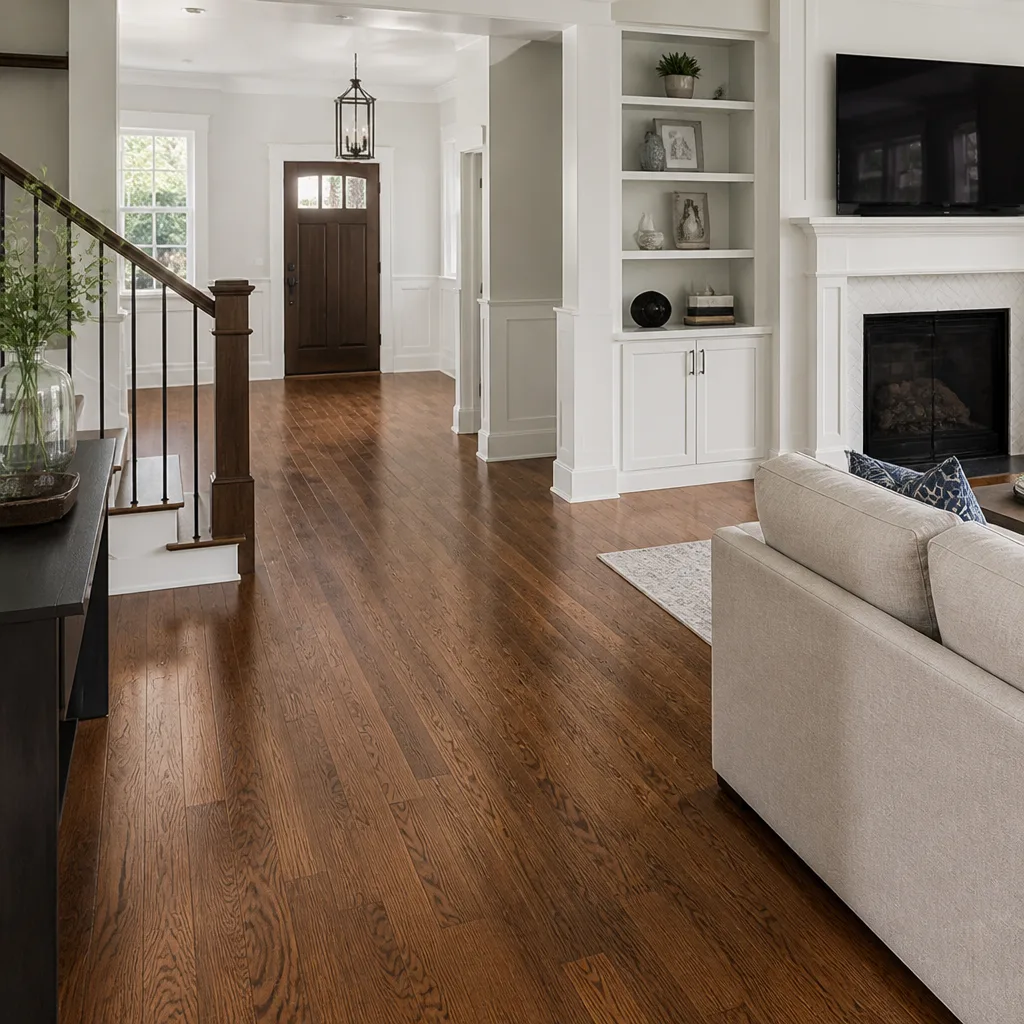 Hardwood
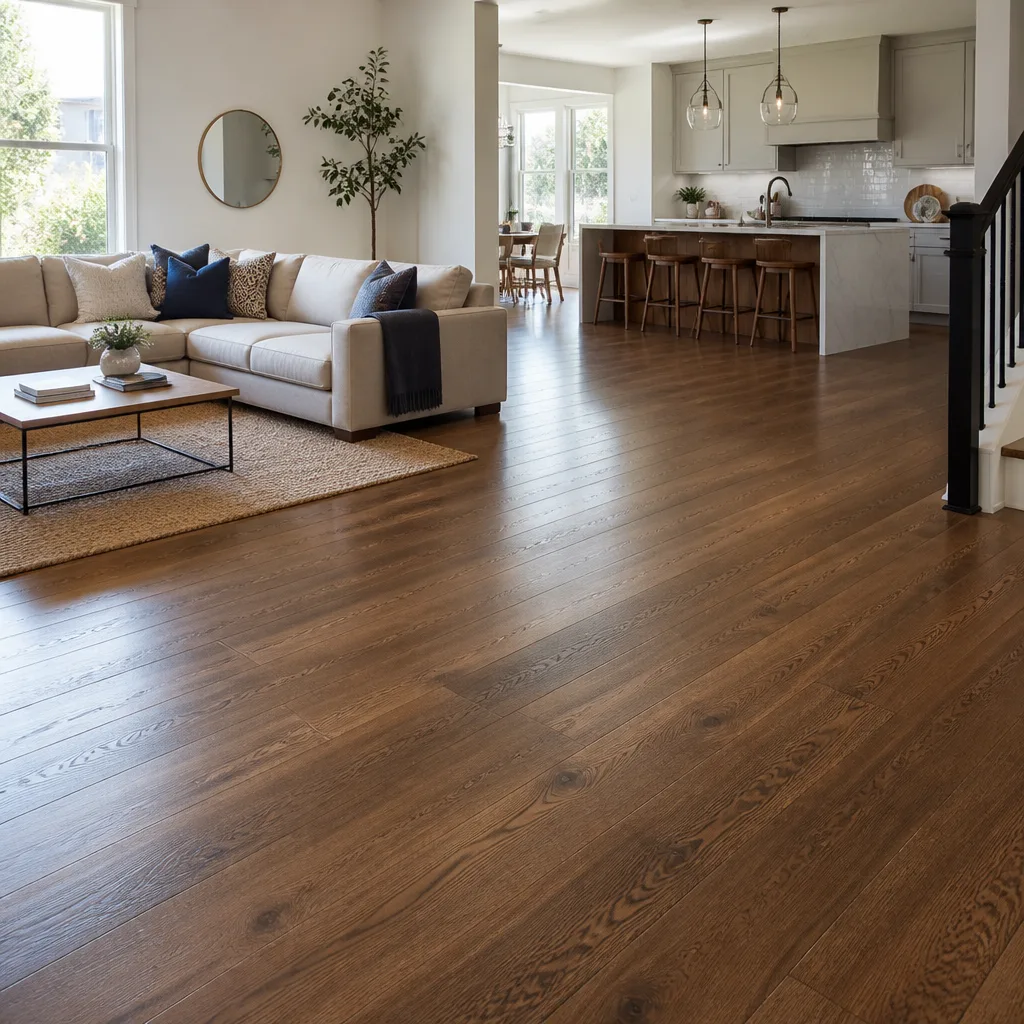 Engineered hardwood
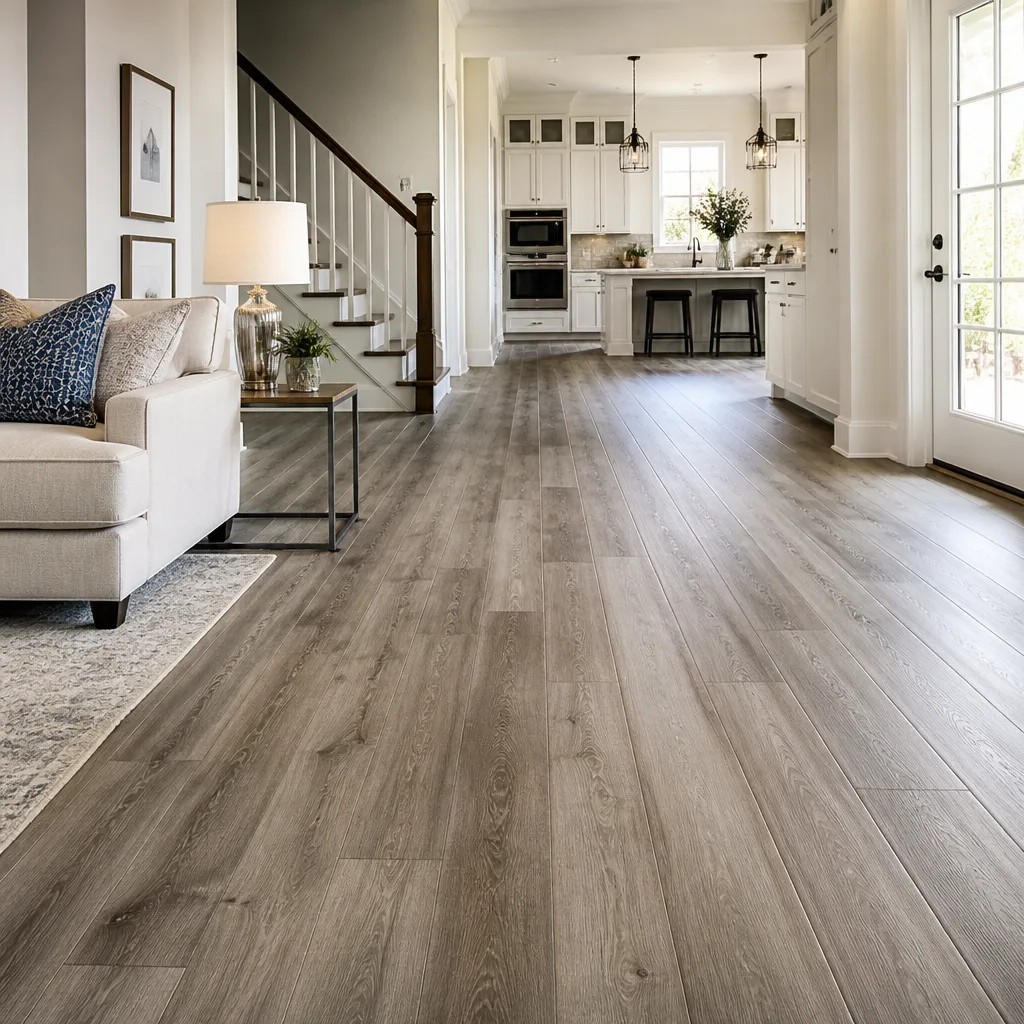 Luxury vinyl plank
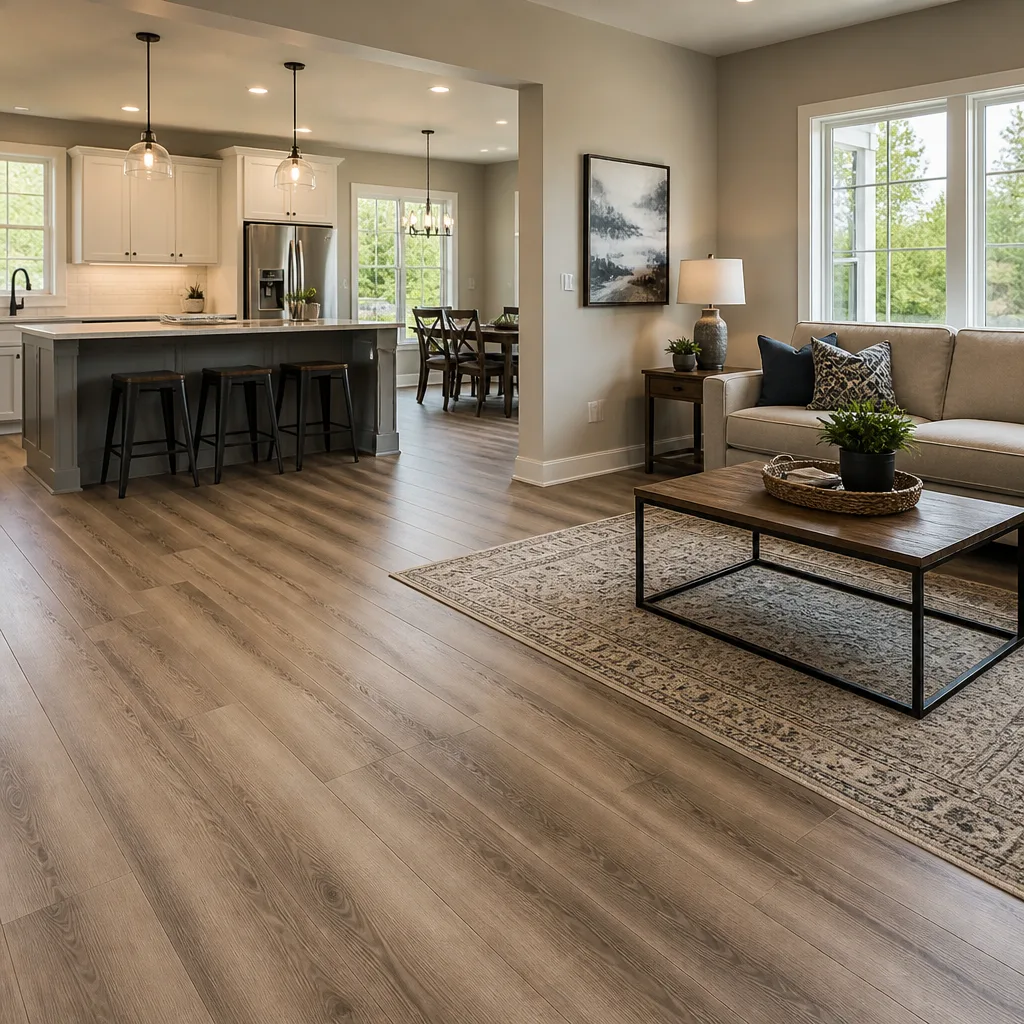 Laminate
 Porcelain tile
 Carpet
 Shaw
 Mohawk
 COREtec
 Pergo
Free in-home measure and written estimate: Shaw, Mohawk, COREtec and Pergo lines compared on your own rooms, with carpet, tile, vinyl plank, laminate and hardwood laid out side by side
Get your free estimateHow Paradise’s Climate Can Affect Your Flooring Choice
Most flooring advice is written somewhere it rains. That’s the problem. Paradise, NV sits in the Mojave, and the Las Vegas Valley regularly drops into single-digit humidity levels through summer – drier than the Sahara on plenty of those days. That one number does more to decide whether your hardwood gaps, your vinyl warps, or your tile holds steady than the species of wood or the pattern on the plank. In this guide we’ll map Paradise’s heat, dryness, dust, and indoor air conditioning cycles to how each flooring category actually behaves, so you can buy for how this valley performs instead of how a showroom in a wetter city looks.
Quick Answer
The best flooring for Paradise’s heat and dry climate is usually tile or a quality luxury vinyl, with engineered hardwood as a reasonable second choice and solid hardwood as the riskiest option. The reason isn’t the heat alone – it’s the combination of humidity that can fall below 10% outdoors, indoor swings from air conditioning cycling, and unshaded west-facing sun that bakes floors through the glass. Material choice matters, but so does where the floor sits in the house and how much direct sun it takes.
Styles & brands we work with
- Hardwood
- Engineered hardwood
- Luxury vinyl plank
- Laminate
- Porcelain tile
- Carpet
- Shaw
- Mohawk
- COREtec
- Pergo
Table of Contents
- Why Sub-10% Humidity Is the Real Story
- Solid Hardwood vs. Engineered Hardwood in the Desert
- Sun, Dark Planks, and Summer Warping
- Why Tile Wins on Thermal Mass and Stability
- How Paradise’s AC Cycling Changes Your Indoor Air
- Which Warranties Actually Hold Up Here
- Dust, Grout, and Everyday Upkeep
- A Step-by-Step Way to Choose
Why Sub-10% Humidity Is the Real Story
Wood moves. That’s not a flaw, it’s biology. A plank absorbs moisture from the air and swells, then releases it and shrinks. When outdoor humidity sits in the teens and single digits for weeks at a time, the air inside a Paradise home pulls moisture out of every wood floor in the house. Planks contract across their width. Gaps open between boards. Edges can cup or crown as the top surface dries faster than the core.
Homeowners often blame the wood species, or the installer, or the finish. In our experience across Paradise, the culprit is almost always the moisture swing, not the material. A floor installed in a wetter climate and then living through a Mojave summer has been asked to do something it wasn’t dried for.
Here’s what that looks like in practice:
- Gapping: thin dark lines open between boards, widening in July and August and partially closing in winter.
- Cupping: board edges rise above the center, giving the floor a washboard feel underfoot.
- Crowning: the opposite – centers rise and edges dip, usually after a moisture event the floor couldn’t recover from.
- Checking: small cracks along the grain on the face of the plank, more common on solid wood in very dry air.
The good news is that the indoor environment is partly in your control. Steady air conditioning, no swamp coolers dumping moisture into the house, and a whole-home humidity level that doesn’t bounce around matter more than any single product choice. If you’re set on wood, plan for the swings and talk through them at the estimate, when the floor can actually be looked at.
Solid Hardwood vs. Engineered Hardwood in the Desert
Solid hardwood is a single piece of wood, top to bottom. Engineered hardwood is a plywood-style core with a real wood wear layer on top. Both contain wood, so both react to humidity – but not in the same way.
Solid hardwood is the more dramatic reactor. It moves more with moisture swings because it’s one solid piece with grain running the full thickness. In a Paradise home where humidity can drop below 10% outdoors, solid planks can shrink enough to leave visible gaps within a season. Those gaps aren’t necessarily permanent damage, but they’re a fact of life and a maintenance item if you want the floor to look tight.
Engineered hardwood has a real advantage here because the cross-lamination of the core resists movement better than a solid board. It’s more dimensionally stable, which is why it performs well in dry climates. But there’s a limit, and this is where a lot of advice goes wrong: engineered hardwood is not immune. The wear layer is still real wood, and the core can still take on or lose moisture. A cheap engineered floor with a thin wear layer in a hot, dry, sunny room is not the same bet as a quality one from a brand like Shaw or Mohawk.
What to weigh:
- Solid hardwood: classic look, can be refinished more times, but moves the most with humidity.
- Engineered hardwood: more stable, better for dry climates, but the wear layer thickness limits how many times it can be refinished.
- Both: need the indoor humidity managed and direct sun controlled.
If a floor is already down and gapping, refinishing can sometimes close minor surface issues, but it won’t stop the wood from moving. Whether a floor can be refinished at all depends on the thickness of the wood and its condition, which we check at the estimate visit.
Sun, Dark Planks, and Summer Warping
Direct sun through a west-facing window in Paradise is not the gentle light of a cooler climate. It’s a concentrated heat load that hits the same few square feet of floor for hours every afternoon through summer. That spot can get far hotter than the rest of the room, and the floor has to handle it.
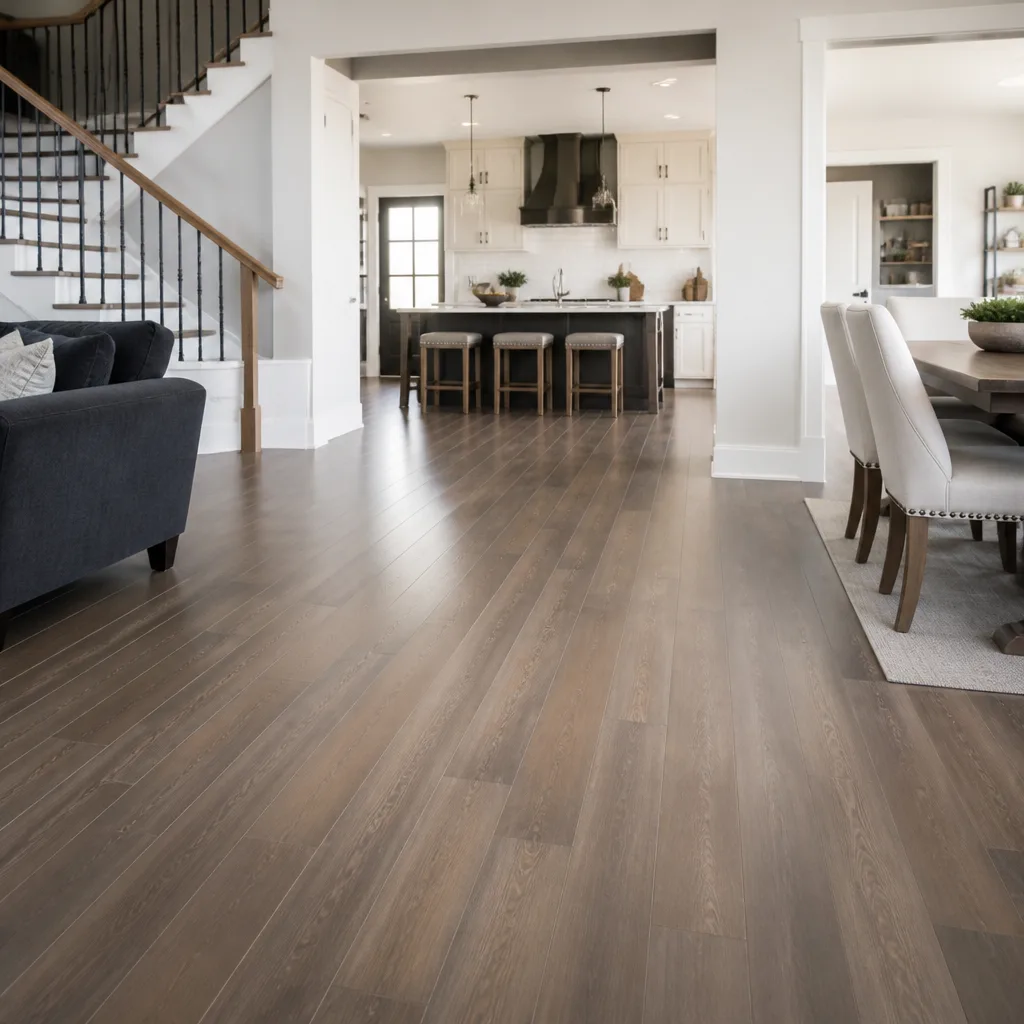
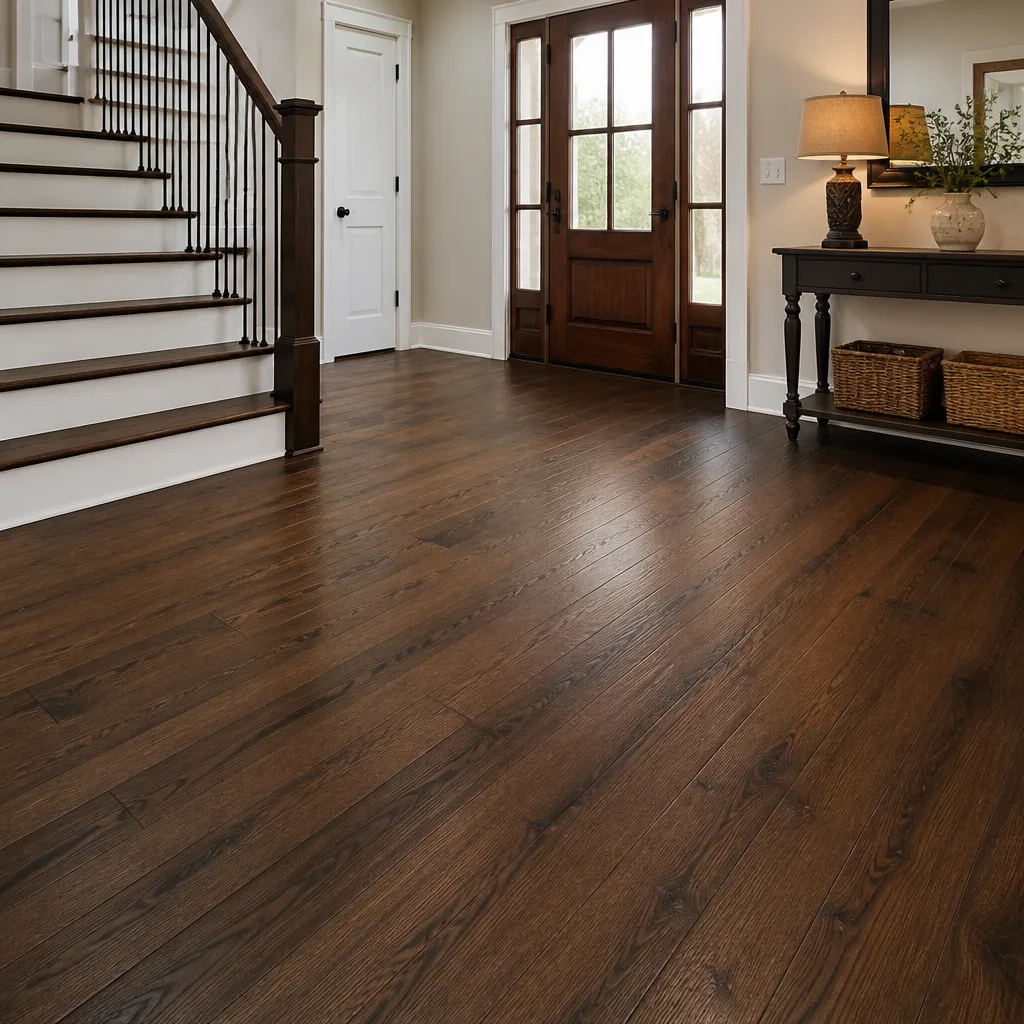
Dark luxury vinyl plank and laminate are the most vulnerable. Dark surfaces absorb more heat. A dark LVP or laminate plank sitting in direct sun through a west-facing window can warp, cup at the edges, or delaminate over the course of a summer. It doesn’t happen to every floor – a lot depends on the product’s construction, the glazing on the window, and how much of the day the sun lands there – but it’s the pattern we watch for, and it’s the one most showroom conversations never mention.
Light-colored floors reflect more of that energy and run cooler. That’s a genuine reason to think about color beyond design, especially in rooms with big unshaded west or south windows.
Practical ways to manage sun load:
- Map the sun. Walk the house in the afternoon and note which rooms take direct sun and for how long.
- Use window coverings. Blinds, shades, or solar screens on the hottest windows cut the heat hitting the floor.
- Choose lighter tones in sun-baked rooms. Save the dark, dramatic planks for rooms that don’t take direct afternoon sun.
- Ask about construction, not just color. Two planks that look identical can behave very differently under heat.
- Keep furniture moving. A rug or heavy piece parked on the same sunlit spot traps heat and blocks airflow.
This is one of the few places where Paradise’s climate makes a design decision for you. In a cooler, cloudier city, a dark plank in a west-facing room is a style choice. Here it’s a performance question.
Why Tile Wins on Thermal Mass and Stability
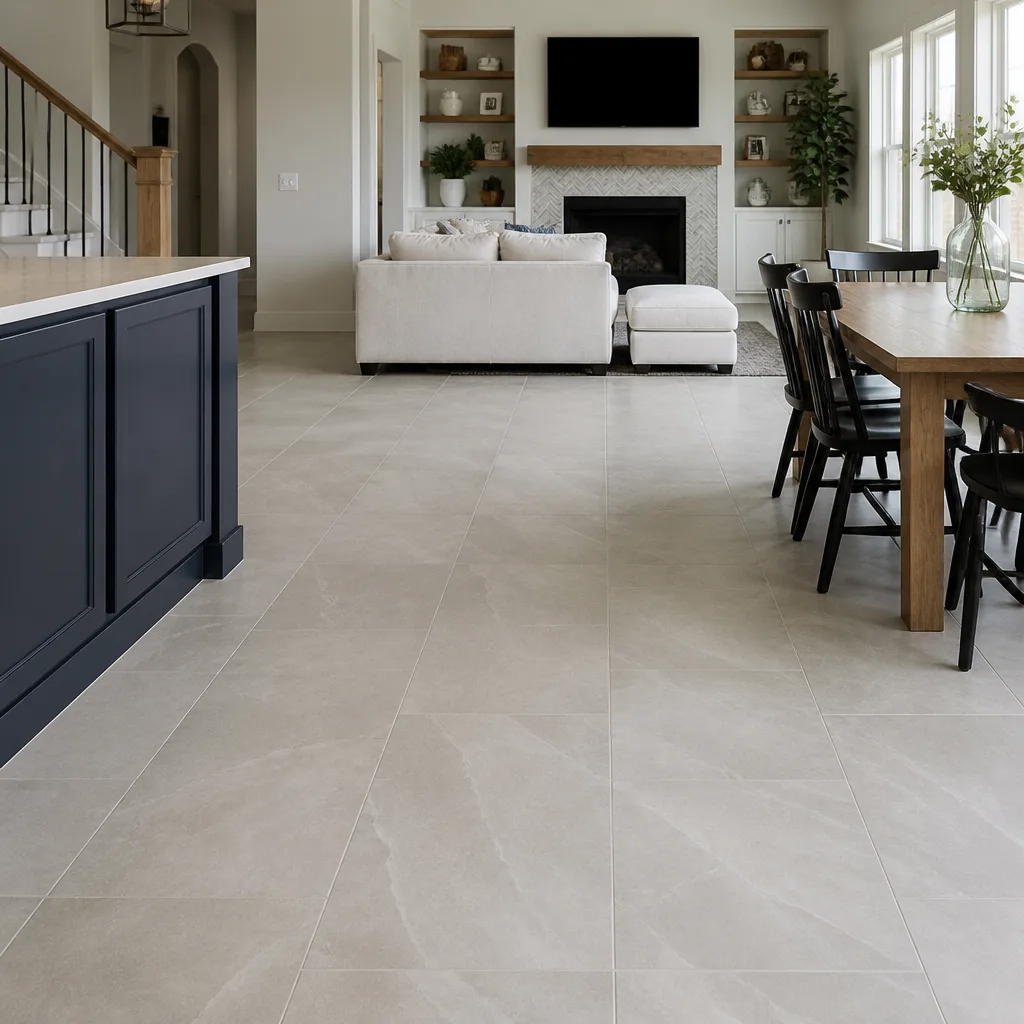
Tile doesn’t care about humidity. It doesn’t swell, shrink, cup, or gap with the seasons. That alone makes tile flooring installation one of the most reliable choices in Paradise’s climate.
There’s a second reason tile performs well here: thermal mass. Tile is dense, and dense materials hold temperature. In a hot climate, a tile floor stays cooler underfoot than a wood or vinyl floor in the same room, and it doesn’t pick up the same sun-driven heat swing. Walk barefoot across tile and hardwood in the same sunlit room on a July afternoon and the difference is obvious.
Tile can also be cooler in a room that isn’t air conditioned yet, or in an entryway where the door opens and closes all day. That thermal behavior is a quiet comfort advantage that doesn’t show up in a product spec sheet.
The catch is grout. Tile is dimensionally stable, but grout lines are where dust and fine desert grit collect. Paradise’s air carries particulate through spring and summer, and it settles into grout more than it does onto a smooth plank floor. Grout selection matters for how that plays out:
- Narrower grout lines give dust less surface to settle into and are easier to sweep clean.
- Darker or mid-tone grout hides the fine dust better than bright white.
- Sealed grout is easier to wipe down and resists staining from tracked-in dirt.
Tile also pairs well with the other categories in a mixed-floor Paradise home – carpet in bedrooms, tile in the kitchen and baths, hardwood in living spaces. That’s a benefit of working with a single-source flooring specialist rather than coordinating separate installers for each floor type.
How Paradise’s AC Cycling Changes Your Indoor Air
Here’s the part that surprises people: the humidity swing inside a Paradise home is often sharper than the one outside. Air conditioning dries the air further when it runs, and it runs hard through summer. But in spring and fall, when days are warm and nights are cool, the AC may sit off for long stretches before kicking back on. That’s a humidity swing, and your floor feels every one.
When the AC is running, indoor air gets drier. When it’s off and windows are open, outdoor air (which in spring can still be very dry) comes in, and the indoor humidity moves around again. The floor is living through a cycle of dry, drier, and briefly less dry, over and over through the year.
This is why a wood or engineered floor that performed fine for its first year can start showing movement in its second. It’s not that the floor failed – it’s that the indoor environment during a Paradise spring or fall is different from what a floor in a steady-climate city sees.
What helps:
- Keep the AC set steady. Big temperature swings pull the indoor humidity up and down with them.
- Avoid swamp coolers indoors. Evaporative cooling adds moisture to the air, which wood floors will absorb and then release.
- Watch spring and fall. That’s when the AC-off periods are longest and humidity moves the most. It’s also when floor issues most often show up.
- Check indoor humidity if you’re worried. A simple hygrometer tells you how much that number moves through the year.
None of this means you can’t have hardwood in Paradise. It means you plan for the cycling rather than assume the floor will handle whatever the house throws at it.
Which Warranties Actually Hold Up Here
Read the fine print, not the front of the box. Many flooring warranties carry exclusions for “extreme climate” conditions, and what counts as extreme is defined by the manufacturer. Some of those definitions are broad enough that a Paradise summer or a dry winter could put a claim at risk.
The pattern to watch for is a warranty that’s long in years but silent on conditions. A long term means little if the manufacturer can point to indoor humidity or direct sun exposure and call the damage outside coverage. Those quiet exclusions are the ones that surprise homeowners.
What holds up better in a dry desert market:
- Products labeled for dry or arid climates. Some lines from Shaw and Mohawk are designed and specified to hold up in low-humidity environments.
- Engineered rather than solid hardwood. The construction is more stable, and the spec sheets usually reflect that.
- Tile. There’s nothing for humidity to swell or shrink, so the warranty conversation is simpler.
- Water-resistant vinyl from COREtec and Pergo. These are built to handle moisture from above, not to promise immunity from a desert, so read what each product actually says.
We always tell customers to read the manufacturer’s own documentation for the product they’re buying, because we don’t write or interpret those warranties. What we can do is install the floor to spec so that if a claim ever comes up, the install isn’t the weak link. The written estimate is also where the schedule, the product, and the installation details get pinned down.
Dust, Grout, and Everyday Upkeep
Paradise’s air carries fine dust through much of the year, and that dust lands on floors. It’s not a crisis, but it shapes how different floors feel day to day.
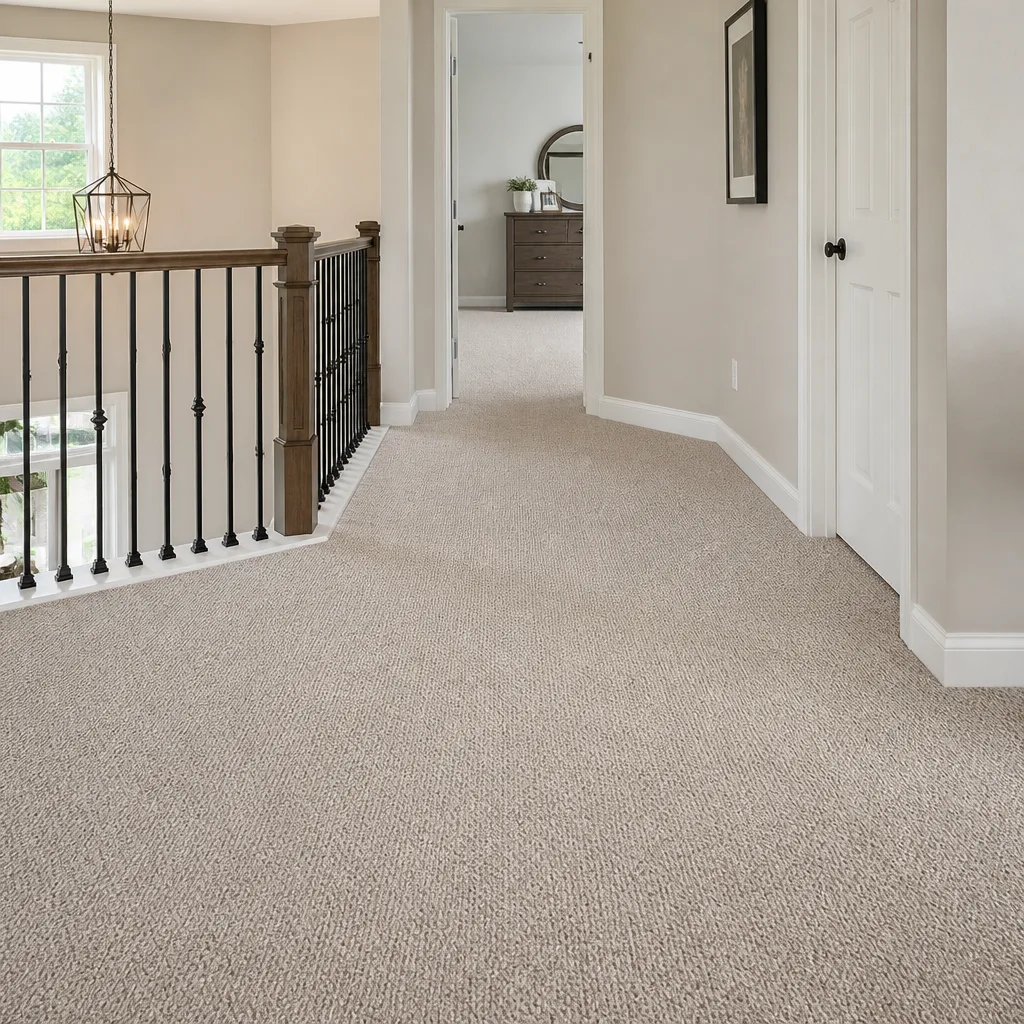
Smooth surfaces – tile, vinyl, sealed hardwood – wipe clean. Textured surfaces trap fine grit. Carpet falls into the second category, and in a dusty climate carpet benefits from more frequent vacuuming than the manufacturer’s generic recommendation, especially in entryways and high-traffic rooms.
A few upkeep habits that matter more here than in a wet climate:
- Use a doormat at every exterior door. Fine desert grit scratches floors when it’s tracked in and walked on.
- Vacuum and sweep often. More frequent than a generic recommendation, especially in spring and summer.
- Keep grout sealed. Sealed grout wipes down easier and resists staining from tracked-in dirt.
- Clean up spills promptly on vinyl. Water-resistant is not the same as waterproof. Standing water and moisture from below still have to be dealt with.
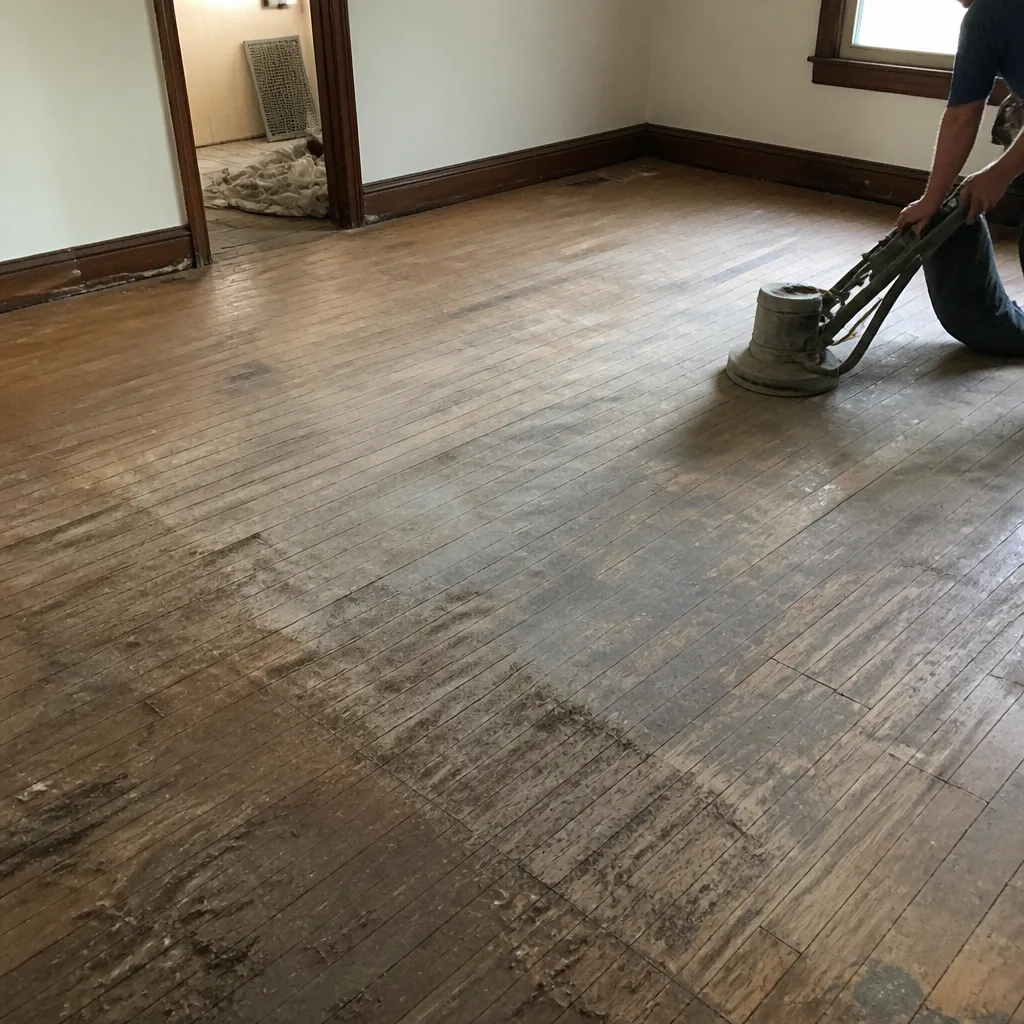
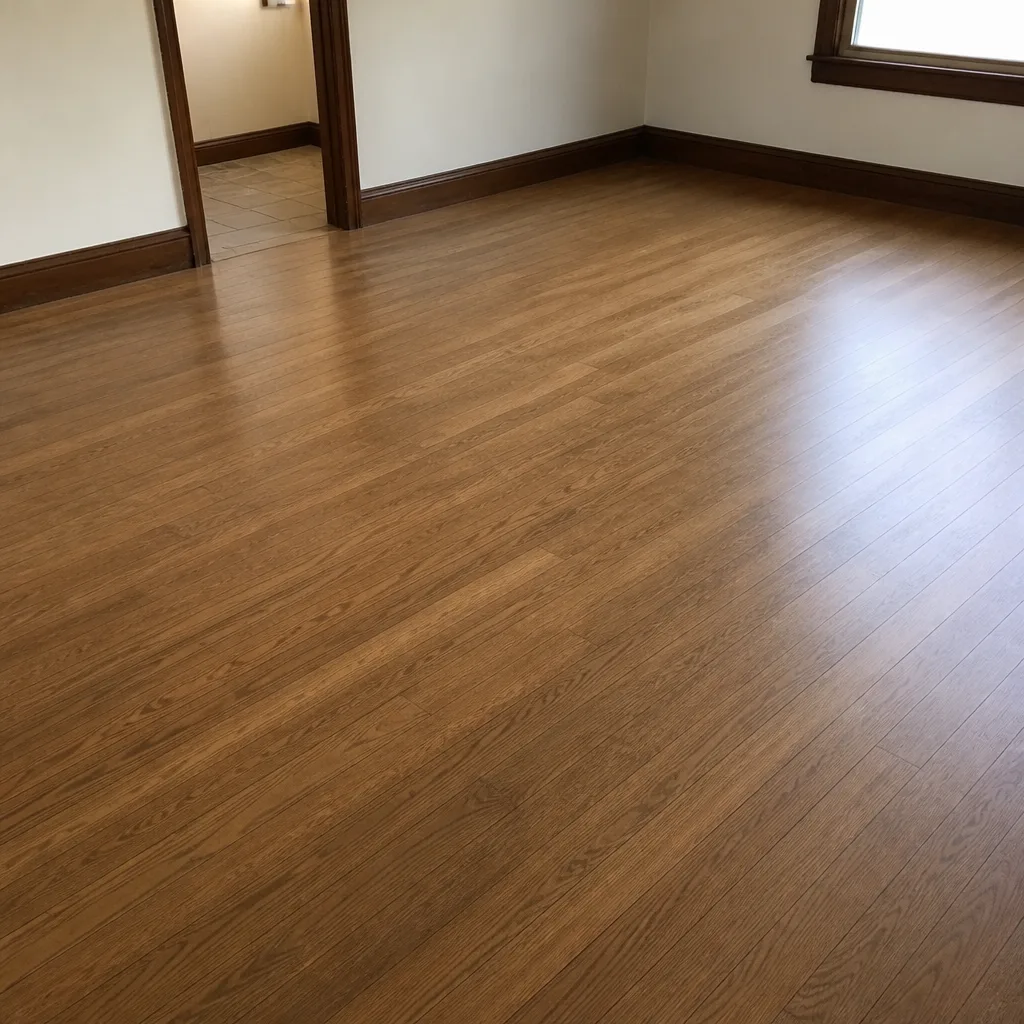
If a floor is due for a refresh, hardwood refinishing is worth thinking about before you assume replacement. A refinish is often a cost-effective alternative to tearing out a floor that’s structurally sound but looks tired. Whether a floor can be refinished depends on its thickness and condition, which we look at during the estimate visit.
A Step-by-Step Way to Choose
Given all the above, here’s how we’d walk through the decision for a Paradise home. It’s the same sequence we use at an estimate visit, and it puts the climate factors in front of the style choice instead of behind it.
- Map the house by sun exposure. Note which rooms get direct afternoon sun, for how long, and through which windows. This tells you where dark planks are a risk and where they’re fine.
- Map the house by moisture exposure. Kitchens, baths, laundry rooms, and entryways take more water and humidity than bedrooms. That’s where tile or a water-resistant vinyl earns its keep.
- Map the house by traffic and dust. Entryways and high-traffic rooms take more grit. Smooth, easy-to-clean surfaces save effort there; carpet is better in bedrooms where it’s quieter underfoot.
- Decide where wood makes sense. Living and dining rooms with controlled sun and steady AC are the friendliest places for hardwood or engineered hardwood. A fully sun-baked west-facing room is not.
- Pick the products that fit the map. This is where the brand roster helps. Nine brands, one installer, and one conversation about how each product behaves in your specific rooms.
- Talk through the install and the warranty. The schedule, the product, and the details get set at the written estimate. Read the manufacturer’s warranty before you commit.
- Plan the transition between materials. If you’re mixing tile, wood, and carpet under one roof, plan the seams and thresholds up front. That’s the value of one company handling all three.
If you’re building a mixed-floor plan – tile in the kitchen, hardwood in the living room, carpet in the bedrooms – the easiest route is to have one specialist handle the whole thing. You can read more about carpet installation and how carpet fits into a desert home, and see the broader picture at Paradise if you want to narrow it down by neighborhood.
Common Mistakes to Avoid
- Choosing the look before the sun map. A gorgeous dark plank in a west-facing room can warp or delaminate within a single hot summer. Walk the house in the afternoon before you pick a color.
- Assuming engineered hardwood is immune to dry air. It’s more stable than solid, but the wear layer is still real wood and the core still moves. It has limits here too.
- Ignoring the grout line. Paradise dust settles into grout more than a smooth plank. Narrow lines and a mid-tone color save cleanup effort.
- Skipping the warranty fine print. A long warranty term doesn’t help if the manufacturer excludes extreme climate conditions. Read what’s actually covered before you commit.
- Using a swamp cooler indoors. Evaporative cooling adds moisture that hardwood will absorb and then release, and it works against everything the dry climate does.
- Treating water-resistant vinyl as waterproof. COREtec and Pergo make water-resistant vinyl that handles spills, but standing water and moisture from below still have to be dealt with.
- Refinishing a floor that’s too thin. Not every floor can be refinished. Whether yours can depends on the thickness of the wood and its condition, which we check at the estimate visit.
See the difference
 Before
 After
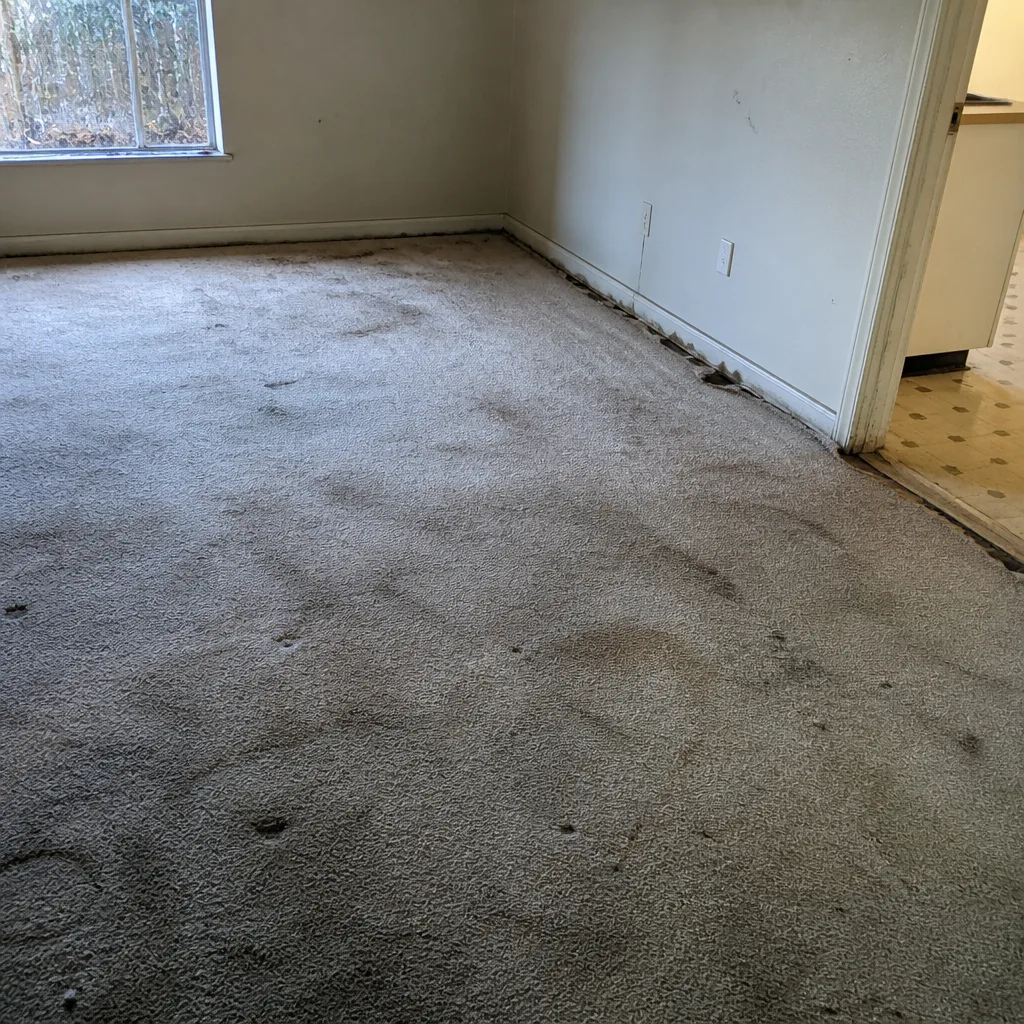 Before
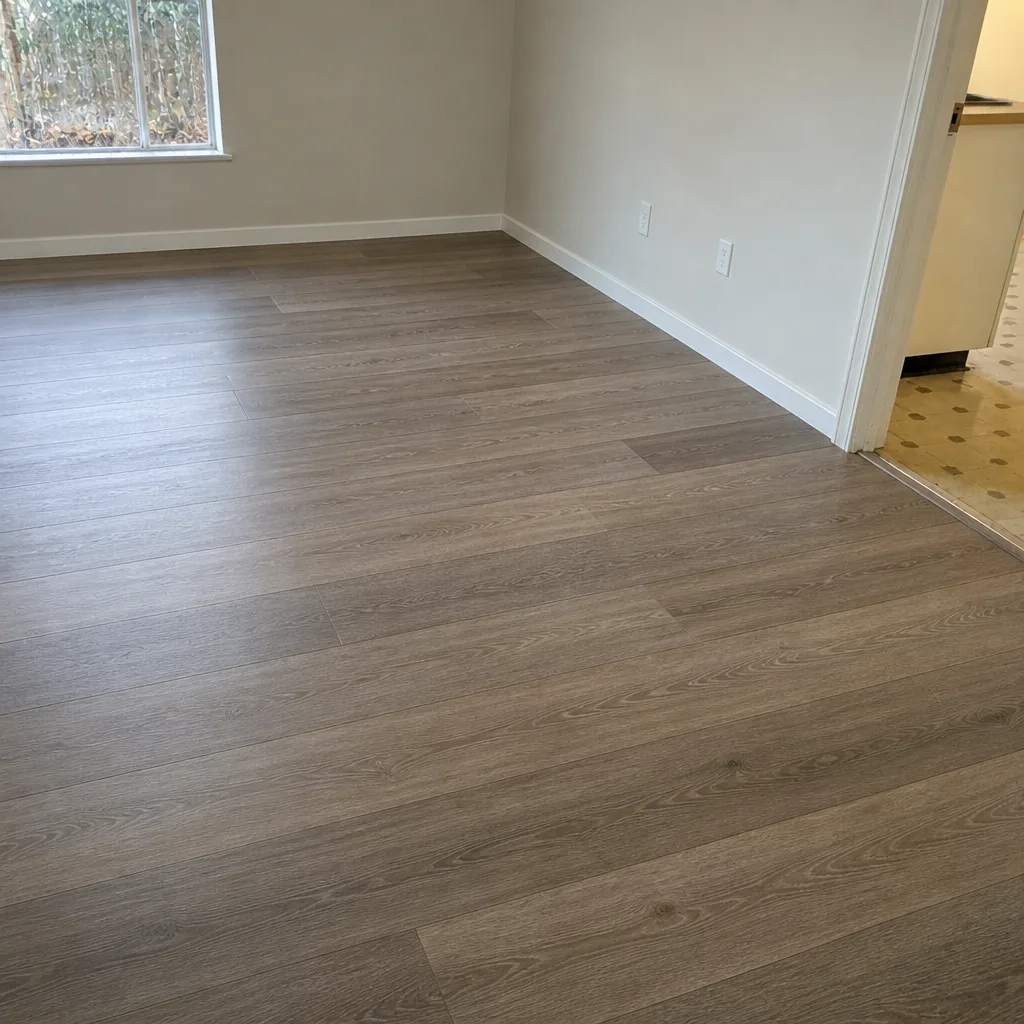 After
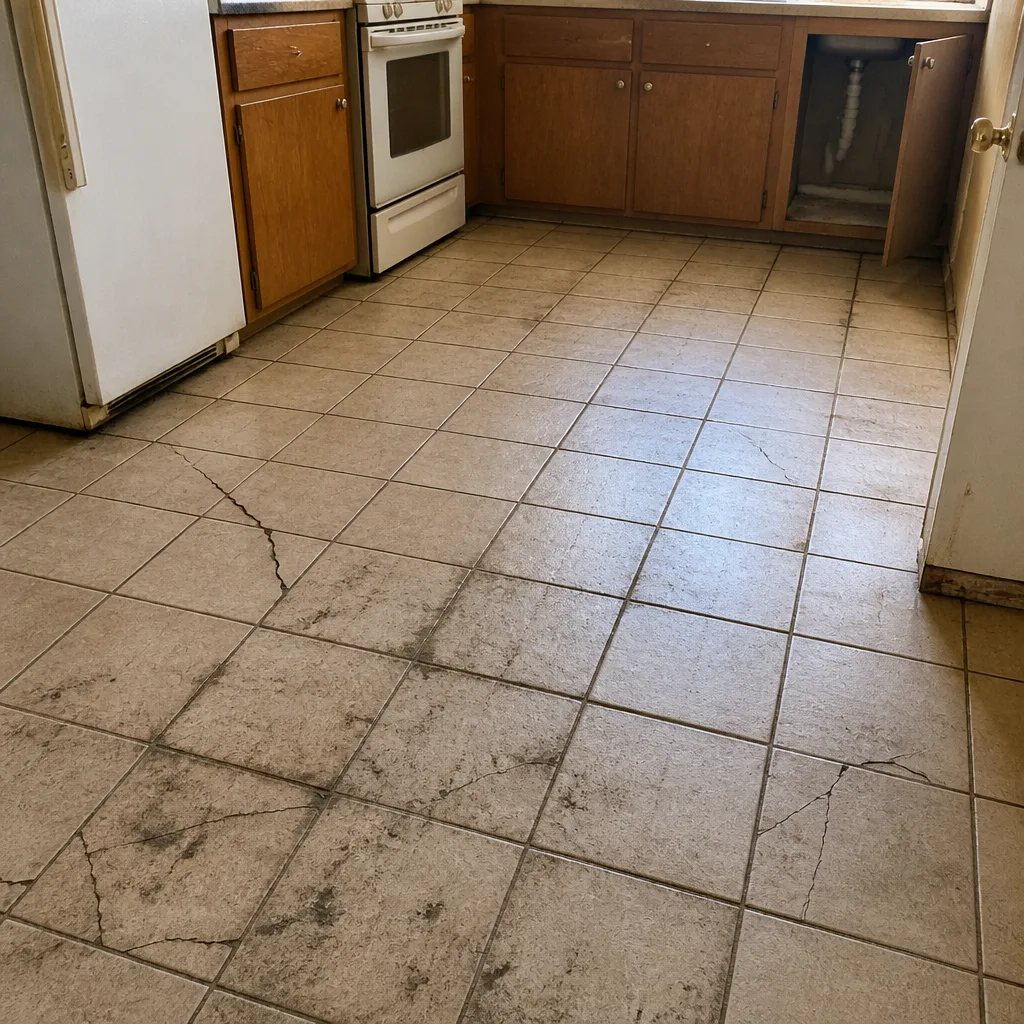 Before
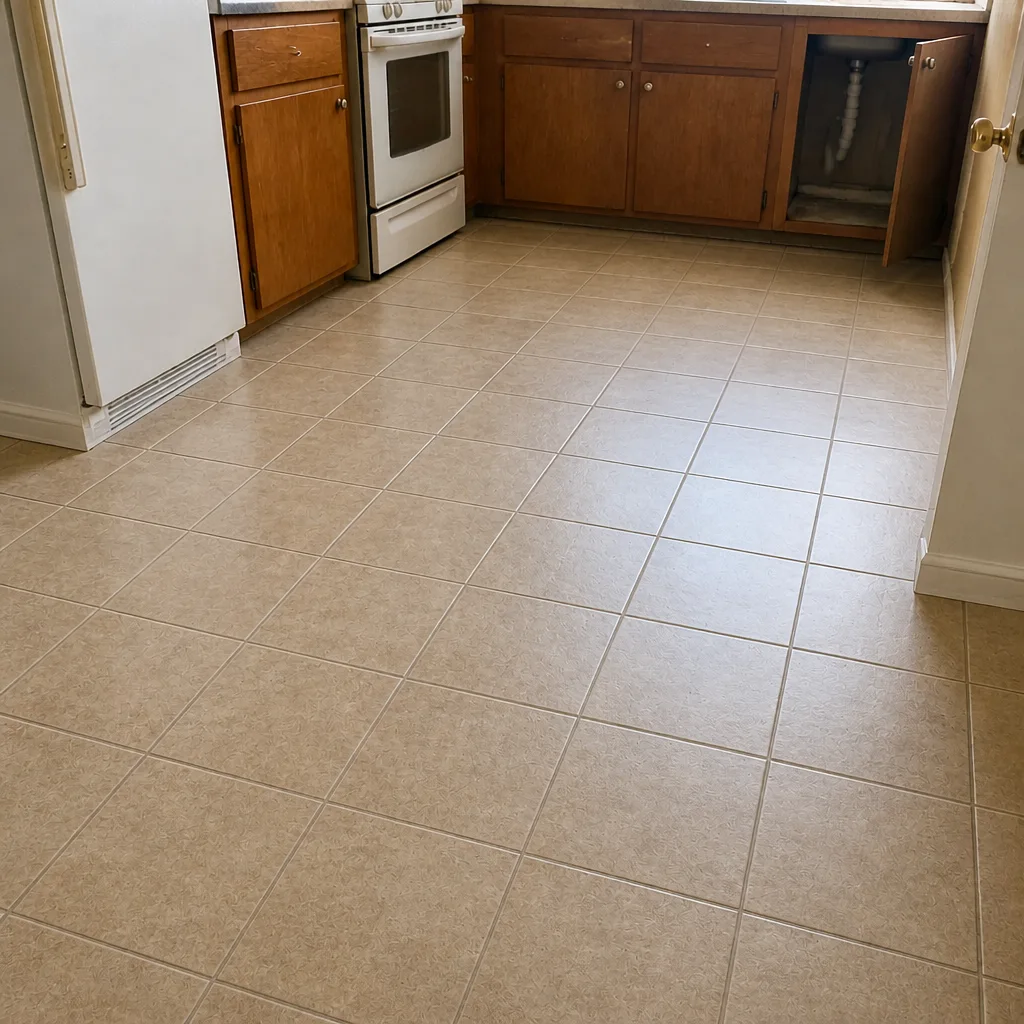 After
When to Call a Professional
Some floor problems are cosmetic and can wait. Some get worse with every season you put them off. If hardwood planks are gapping enough that dust and grit collect in the seams, if a board has cupped or crowned under sun or moisture, if a vinyl plank is curling at a seam in a west-facing room, or if a tile has popped loose, it’s worth getting someone out to look at it. The same goes for mixed-floor homes where a single failed seam between tile and wood is letting moisture in. Carpet Installation Paradise offers free estimates in Paradise – call (844) 797-3061. We answer 24/7. Fast dispatch from 7am to 7pm, Sunday through Friday, and if a call lands outside dispatch hours it’s booked into the next opening. Our technicians have up to 12 years of experience, and we install and service the floors you choose across carpet, tile, and hardwood refinishing.
Frequently Asked Questions
Tile is the most reliable choice, followed by engineered hardwood and water-resistant vinyl, with solid hardwood the most likely to move and gap. The climate factors that push this ranking are single-digit outdoor humidity in summer, indoor humidity swings from AC cycling, and direct sun through west-facing windows. Call (844) 797-3061 to schedule a free estimate in Paradise.
It can. Solid hardwood shrinks as it loses moisture to dry air, and when outdoor humidity sits in the low teens or single digits for weeks, planks contract across their width and visible gaps open between boards. The gaps often close partially in winter, but a plank that moves and recovers season after season will keep showing it. Call (844) 797-3061 for a free estimate and we’ll tell you whether your floor is a refinish candidate or a replacement.
Yes, especially dark LVP left in direct afternoon sun through a west-facing window. The heat load on that spot can be severe through summer, and some planks warp, cup at the edges, or delaminate over a single hot season. Lighter tones and window coverings reduce the risk. Call (844) 797-3061 for a free estimate before you buy a plank for a sun-baked room.
Generally yes, because the cross-laminated core resists moisture movement better than a solid board. But engineered hardwood isn’t immune to dry air – the wear layer is still real wood, and the core still moves. The best choice is one built for dry climates from a brand like Shaw or Mohawk, installed to spec. Call (844) 797-3061 for a free estimate on engineered hardwood for a Paradise home.
Because a Paradise home’s indoor humidity swings harder than it would in a steadier climate. In spring and fall, the AC may sit off for long stretches and then kick on hard, which means the indoor humidity moves up and down through the year. Wood floors absorb that swing and move with it. Call (844) 797-3061 to schedule a free estimate and we’ll walk through how your specific rooms behave.
The schedule is set at the estimate, because it depends on the product, the room size, and the substrate. What we do is measure your space and give you a written estimate with the details pinned down before any work is booked. Call (844) 797-3061. We answer 24/7. Fast dispatch from 7am to 7pm, Sunday through Friday.
The Bottom Line
Paradise’s climate is not the background condition it is in most places. Single-digit summer humidity, sun that bakes west-facing floors, and AC cycles that swing indoor moisture make the valley a real test for any floor. The safest choices are tile and quality water-resistant vinyl, with engineered hardwood as a reasonable middle ground and solid hardwood as the one to plan around most carefully. Read the manufacturer’s warranty. Walk your house in the afternoon before you pick a color. And if you’re unsure, get a free estimate from someone who knows how floors perform here, not just how they look in a catalog. Call (844) 797-3061 to schedule yours.
Written by the team at Carpet Installation Paradise.