
Last updated November 18, 2026
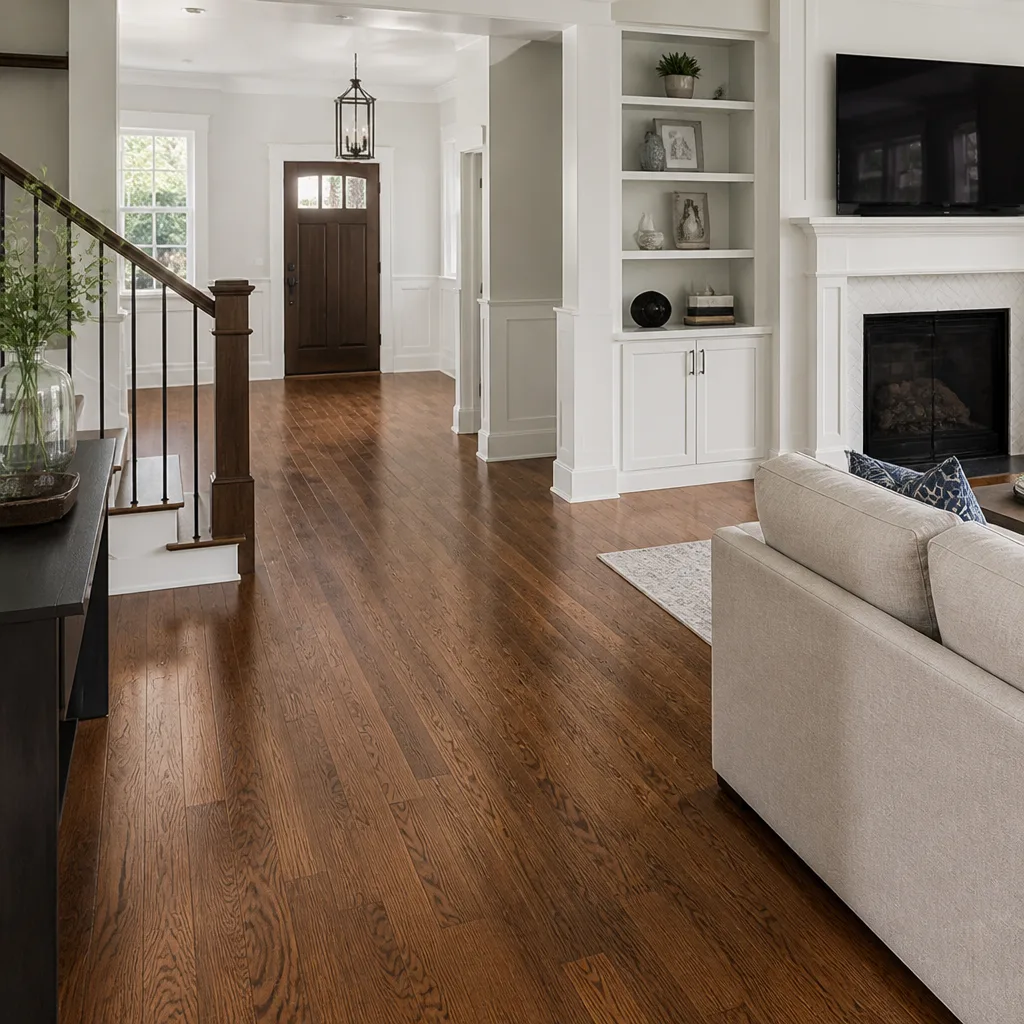 Hardwood
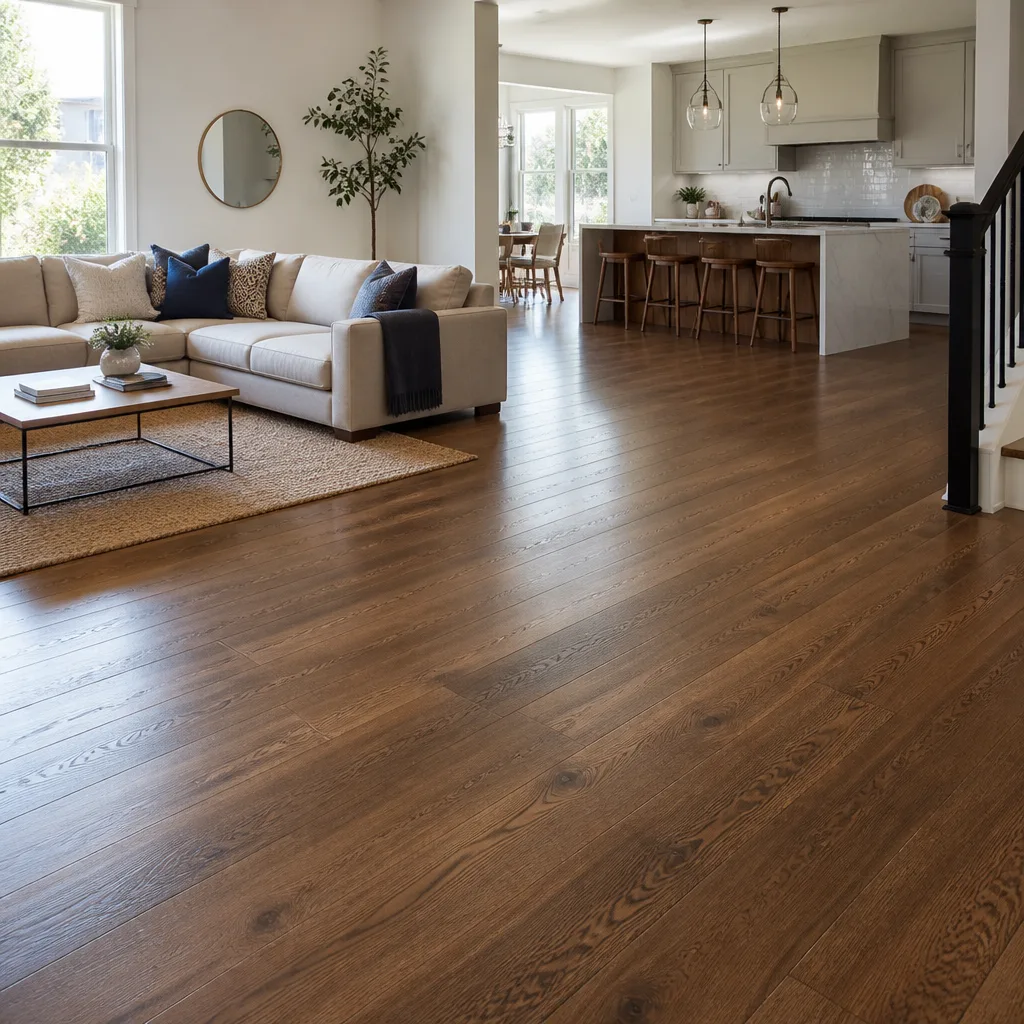 Engineered hardwood
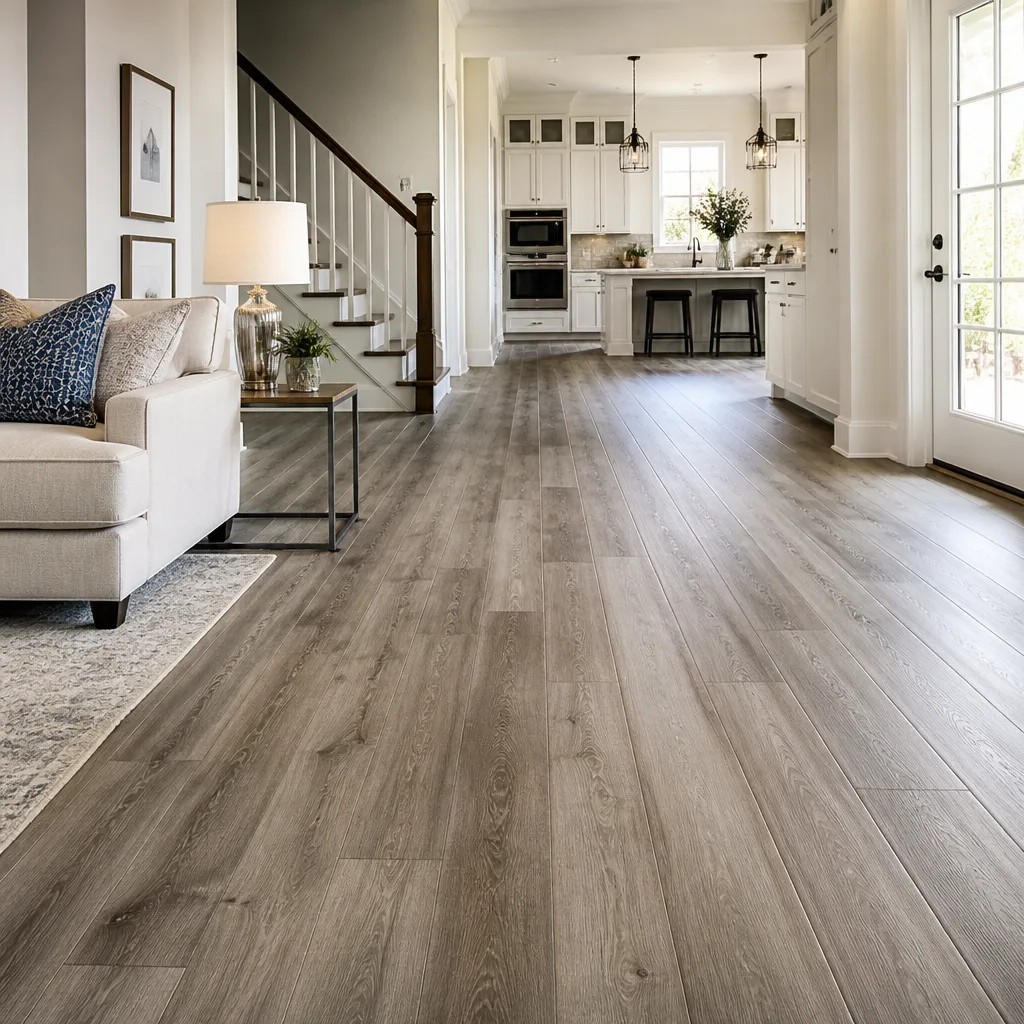 Luxury vinyl plank
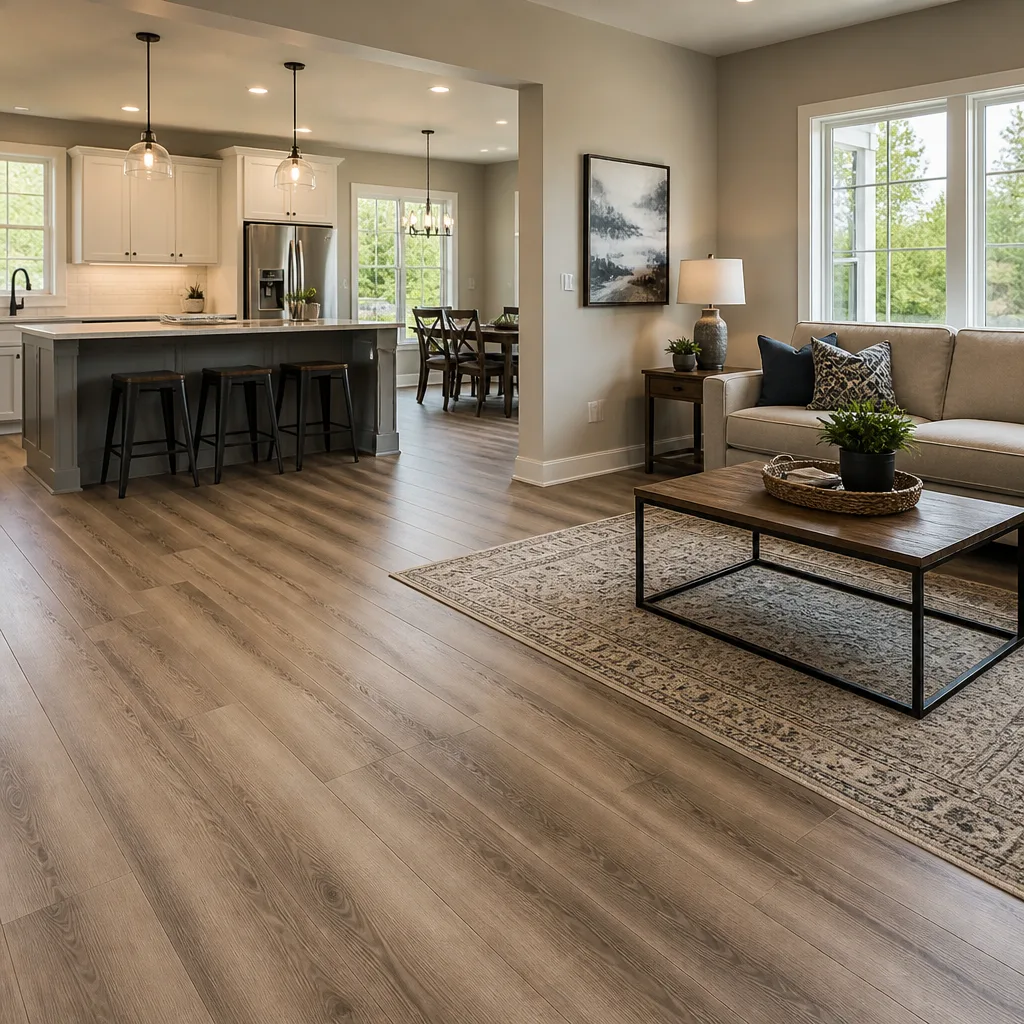 Laminate
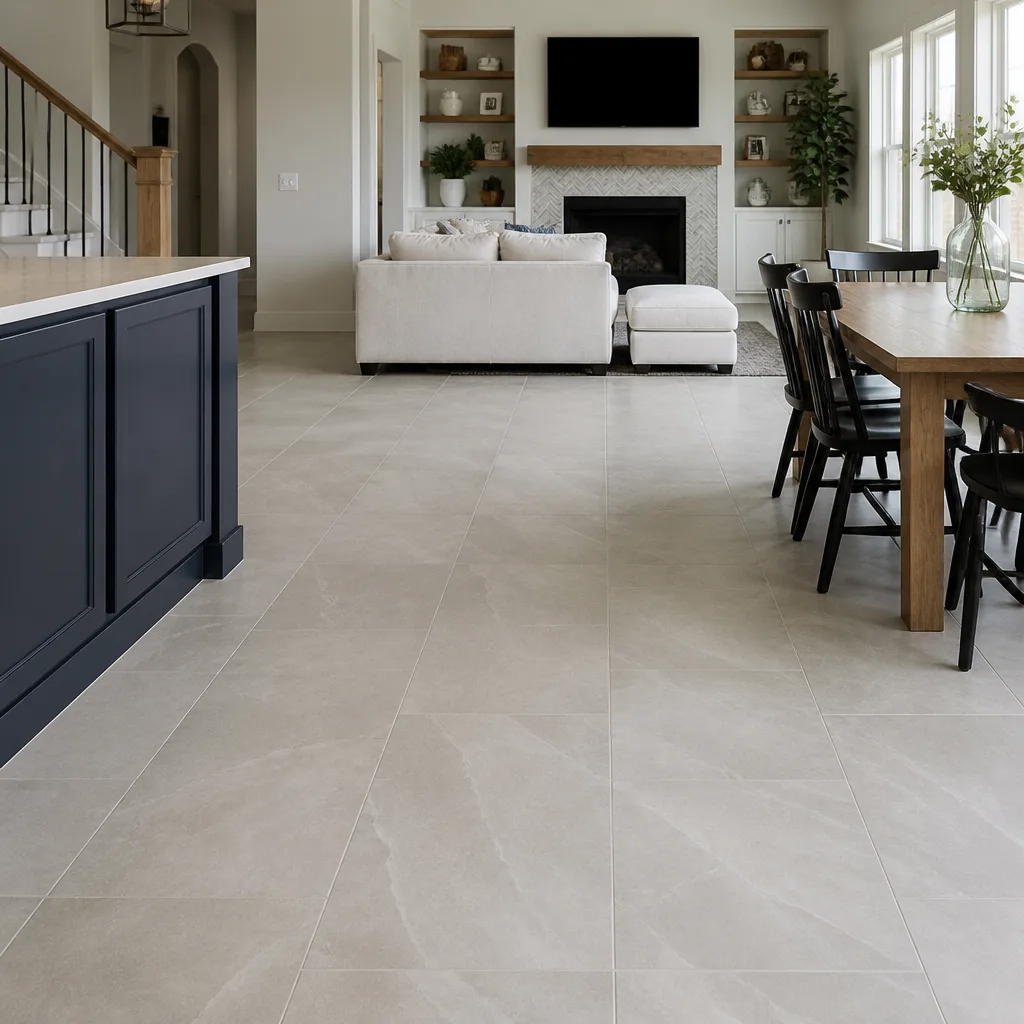 Porcelain tile
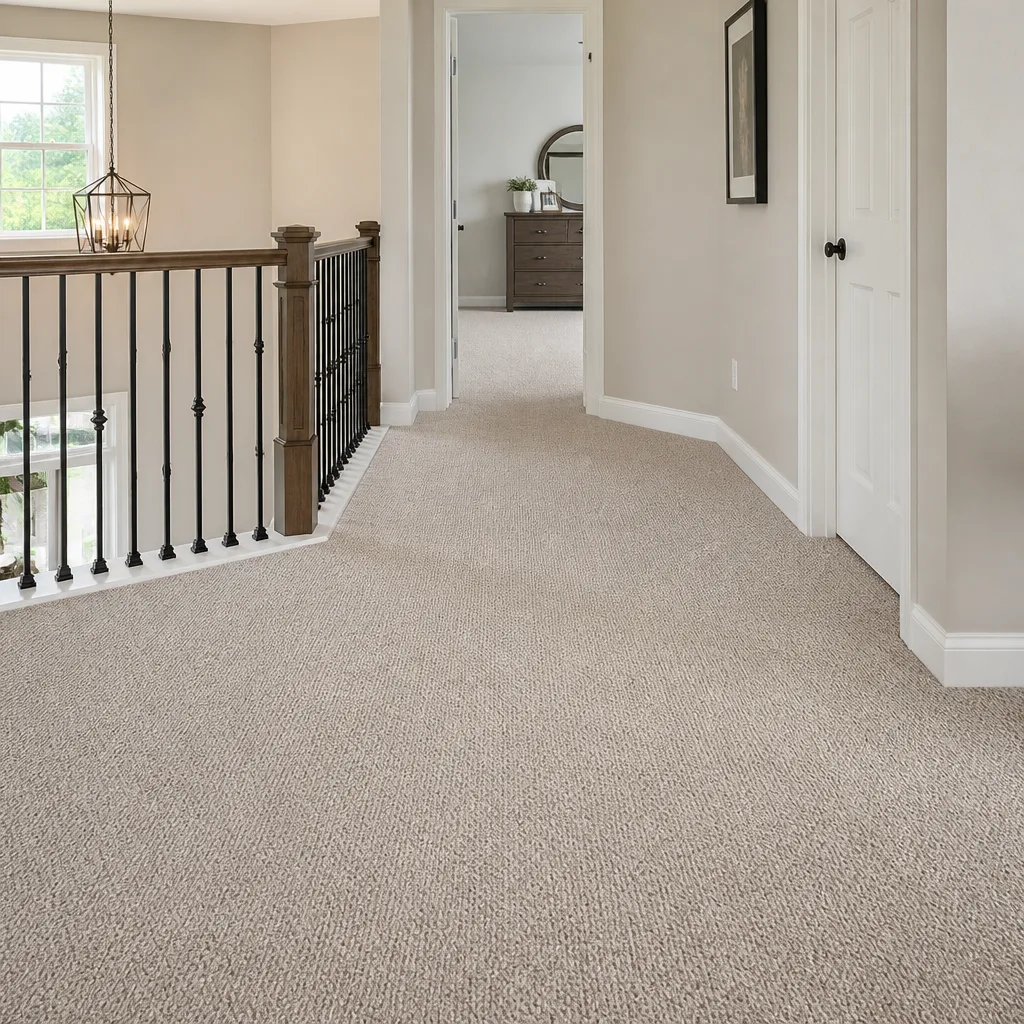 Carpet
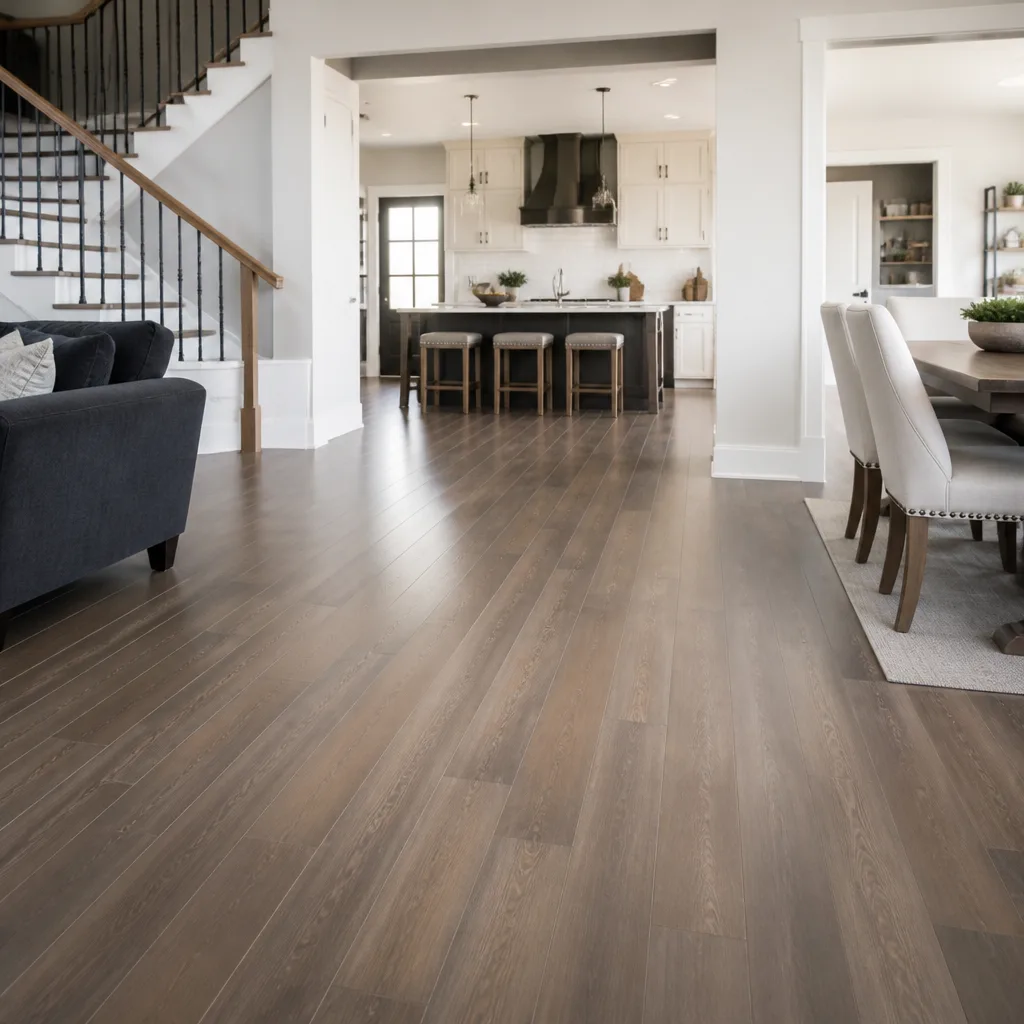 Shaw
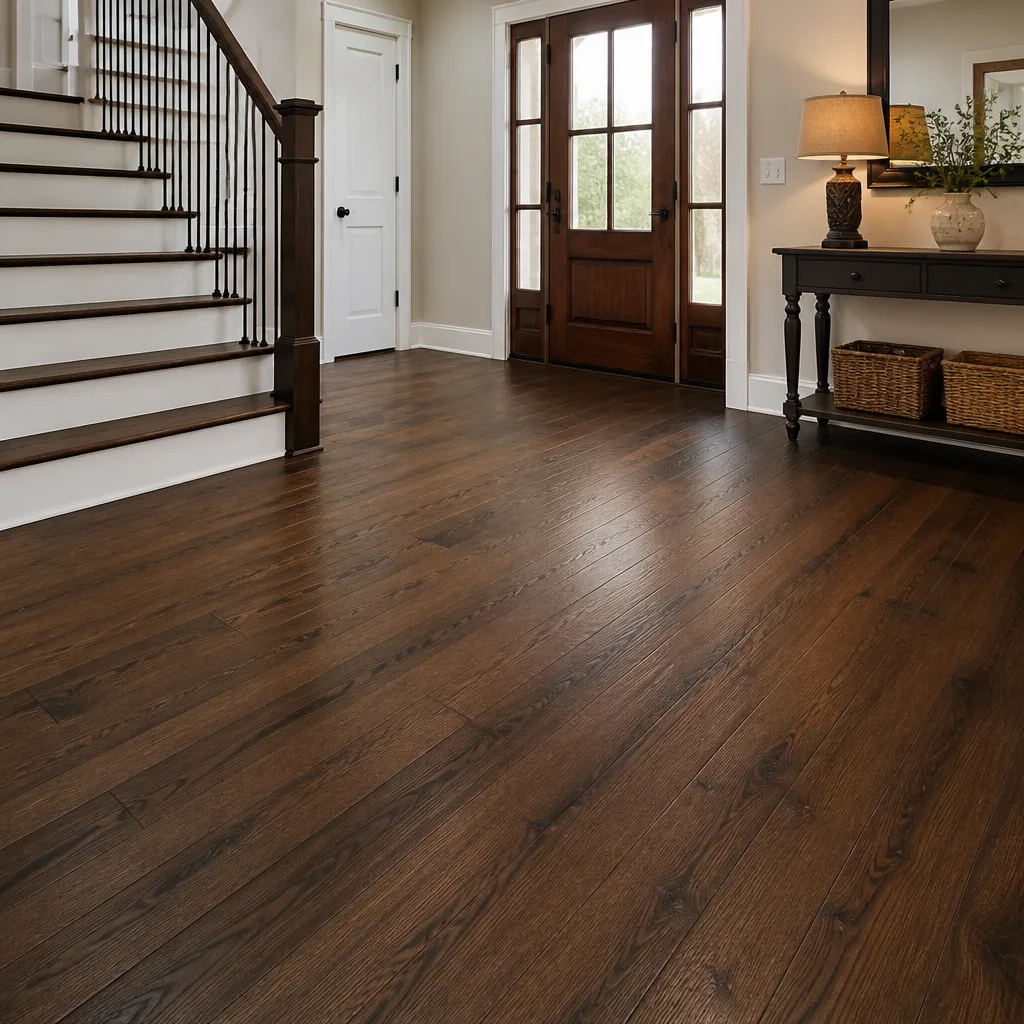 Mohawk
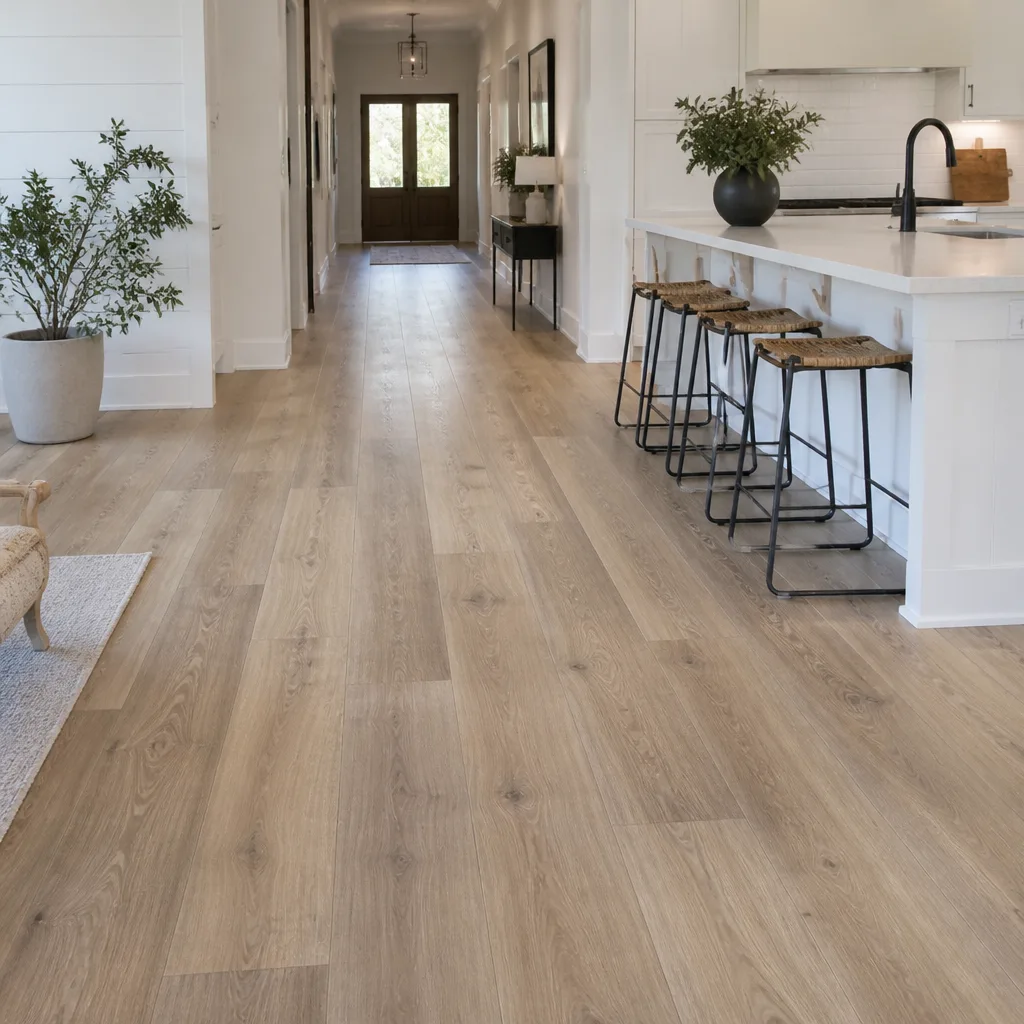 COREtec
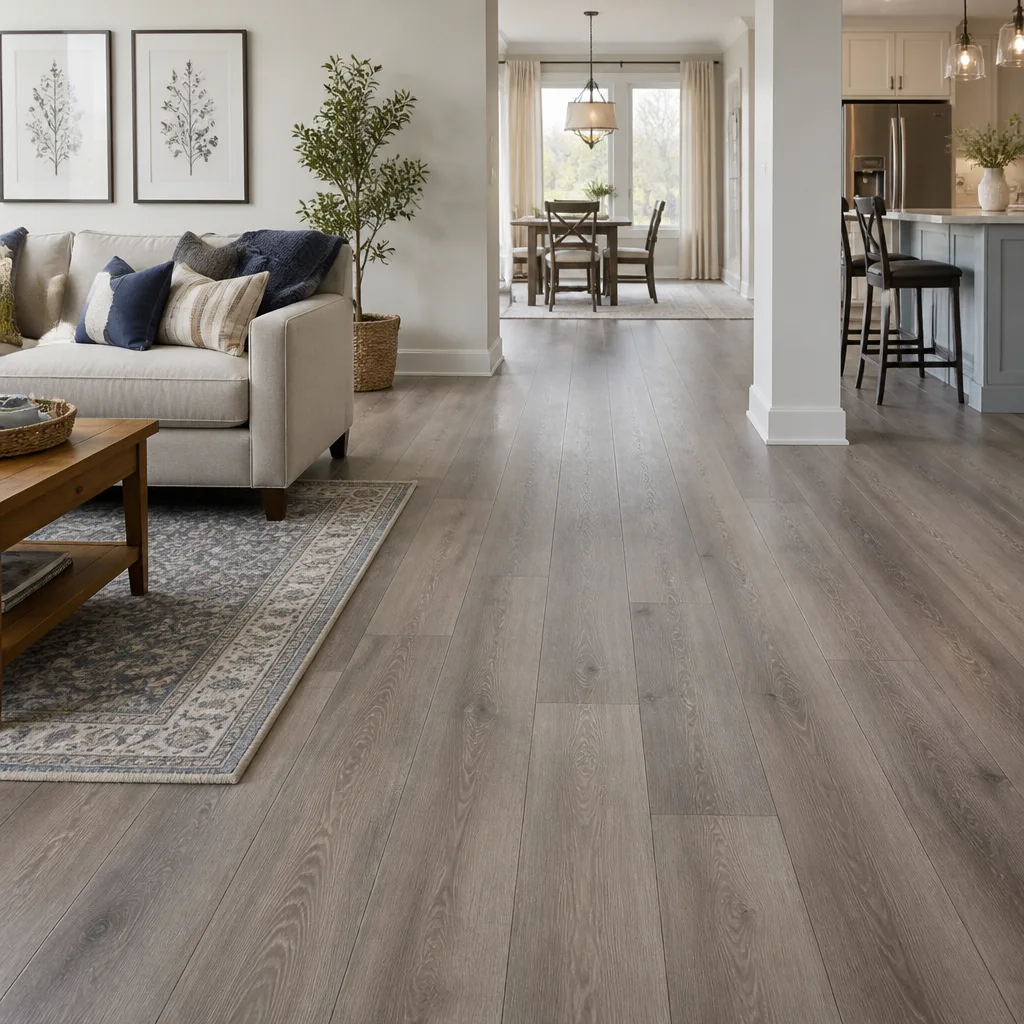 Pergo
Free in-home measure and written estimate: Shaw, Mohawk, COREtec and Pergo lines compared on your own rooms, with carpet, tile, vinyl plank, laminate and hardwood laid out side by side
Get your free estimateThe Complete Guide to Flooring in Paradise
Most flooring guides are written for climates with basements and humidity swings. Paradise homes sit on concrete slabs in 115°F summers, which eliminates entire product categories before you even walk into a showroom. That single construction fact changes which hardwood you can use, whether vinyl or tile wins a room, and how a glue-down floor behaves after a decade of desert heat cycling. This guide treats Paradise as its own flooring environment, not a footnote to Las Vegas. You’ll learn how slab construction, extreme summer heat, and HOA density shape every decision, from material choice to the order you install rooms. We’ve spent years installing carpet, tile, and hardwood in Paradise, and this is what actually works here.
Quick Answer
Flooring in Paradise comes down to three local facts: homes are built on concrete slabs with no basement or crawlspace, summer heat pushes interior surfaces hard, and a large share of neighborhoods are governed by HOAs with material and noise rules. The practical result is that floating floors and glue-down systems need to be chosen with heat movement in mind, solid hardwood is often a poor fit for a slab, and engineered hardwood, tile, and water-resistant luxury vinyl tend to be the safer long-term picks. Check your HOA’s approved materials list before you buy anything.
Styles & brands we work with
- Hardwood
- Engineered hardwood
- Luxury vinyl plank
- Laminate
- Porcelain tile
- Carpet
- Shaw
- Mohawk
- COREtec
- Pergo
Table of Contents
- Why slab-on-grade construction rules out some floors
- How extreme heat cycling affects glue-down versus floating floors
- What Paradise HOA density means for your flooring choice
- Vinyl versus tile: the desert calculus
- A room-by-room map of flooring categories
- How to sequence a multi-room flooring project
- Nine brands, one installer: how to think about product lines
- Common mistakes to avoid
Why slab-on-grade construction rules out some floors
Walk into most Paradise homes and there’s no basement, no crawlspace, and no wood subfloor. The finished floor sits directly over a concrete slab, sometimes with a thin underlayment and sometimes not. That one detail reshapes the entire buying decision, and it’s the reason so much national flooring advice doesn’t transfer here.
Solid hardwood is the clearest casualty. Solid planks expand and contract across their width as humidity changes, and they need to be nailed or stapled into a wood subfloor to stay put. On a slab, you generally can’t install solid hardwood directly, and even where a manufacturer allows a glue-down method, the concrete has to be dry and stable enough for the adhesive to hold. Many Paradise homes built fast over the last few decades have slabs that need moisture checked carefully before any wood-based floor goes down. The outcome is that engineered hardwood, which has a plywood core that tolerates slab installation far better, usually becomes the realistic hardwood option. Engineered planks still carry a real wood top layer that can be refinished in some cases, though not as many times as solid wood, and how many passes a floor can take depends on the thickness of that top layer and its condition. We check that at the estimate visit, not from a photo.
Tile and luxury vinyl are naturally at home over a slab. Both are dimensionally stable enough to sit directly on concrete, and both handle the thermal mass of a slab well, which matters in a desert. The slab stays cooler in summer than the air above it, and it also holds heat longer in the shoulder months, so the floor you pick should be comfortable to walk on barefoot through a long Paradise summer.
- Works well on a slab: tile, luxury vinyl plank and tile, engineered hardwood, carpet with the right pad.
- Needs caution on a slab: solid hardwood, some laminate when moisture isn’t managed, any floor over a slab that hasn’t been checked for moisture.
- Ask about at the estimate: whether your concrete needs a moisture test, and what underlayment the product calls for over slab.
How extreme heat cycling affects glue-down versus floating floors
Paradise summers push interior surfaces hard, especially in rooms with big west-facing windows and in homes where the air conditioning is set back during the day. A floor moves as its temperature changes, and the two main installation methods handle that movement very differently.
A floating floor isn’t attached to the slab. The planks lock together and rest on an underlayment, and the whole assembly expands and contracts as one sheet. That movement has to be absorbed with expansion gaps at the walls, and those gaps are hidden under baseboards. Skip or crowd the gap, and a floating floor can buckle or gap at the seams during the first real heat wave. The upside is that a floating floor is quick to install and easier to replace later.
A glue-down floor is bonded to the slab with adhesive. It doesn’t move as a sheet, which makes it more stable underfoot and often quieter. But the slab’s own movement, its moisture, and the adhesive’s ability to hold through temperature swings all matter. In a Paradise home, that means the concrete has to be checked and prepped properly, and the adhesive has to match the product. When the prep is done right, glue-down tile and glue-down luxury vinyl hold up well through desert temperature swings. When it’s rushed, the failure shows up as lifting edges or hollow-sounding spots.
Both methods are valid. The choice depends on the room, the product, and how much movement the assembly can handle. We’ll look at your slab and your rooms and recommend the method the specific product calls for, not a one-size approach.
- Check the slab first. Moisture and flatness get measured before any floor is chosen.
- Pick the method around the product. Some vinyl and tile lines are made for glue-down, others for floating. The instructions set the rule.
- Respect the expansion gap. Floating floors need room to move at every wall and doorway.
- Plan for sun exposure. Rooms with heavy afternoon sun need the floor’s heat tolerance checked against where the furniture and rugs will sit.
What Paradise HOA density means for your flooring choice
A large share of Paradise neighborhoods are governed by HOAs, and many of those associations have rules that reach inside your unit. Two categories matter most for flooring: noise transmission and approved materials.
Noise rules usually target upper-floor installations in attached or condominium buildings. Hard floors reflect sound, and an HOA may require a specific underlayment with a sound rating, or may prohibit hard flooring in bedrooms above another unit. The rules vary from association to association, so the only reliable approach is to read your CC&Rs and any architectural guidelines before you buy material. A floor that’s perfectly legal in one Paradise community can be a violation two streets over.
Approved material lists are the second issue. Some HOAs restrict exterior-visible flooring (patios, balconies) or specify which materials can be used in common areas. Interior rules are usually lighter, but it’s worth checking. The most expensive mistake in Paradise isn’t picking the wrong floor. It’s picking the right floor and then finding out your HOA won’t allow it, after the material is delivered and cut.
- Read your CC&Rs first. Look for noise, underlayment, and material sections before you price anything.
- Ask about sound ratings. If you’re on an upper floor, ask what underlayment your association requires.
- Get approval in writing. If your HOA requires architectural review, get the approval before the install date, not after.
- Keep the paperwork. A written approval protects you if a neighbor raises a question later.
We can install the floor your HOA approves, and we can talk through which products fit the sound requirements, but the approval itself has to come from your association. That’s a conversation to have early, when you’re still choosing, not on install week.
Vinyl versus tile: the desert calculus
In most of the country, vinyl wins on price and tile wins on durability, and the debate ends there. In Paradise, the calculation is a little different, because heat, slab construction, and water all pull on the decision at once.
Tile is the most heat-tolerant floor in the house and the most forgiving of a slab that isn’t perfectly flat beneath it, because the mortar bed absorbs small variations. It’s also genuinely water-tolerant in ways that matter in kitchens, bathrooms, and laundry rooms. The tradeoff is that a cold tile floor in a Paradise winter (yes, they exist, and desert nights drop fast) isn’t comfortable barefoot, and tile can crack if the slab moves or a heavy object lands in the wrong spot.
Luxury vinyl plank and tile have become the default for many Paradise households because they solve several local problems at once. Water-resistant lines handle kitchen and bath spills far better than carpet or wood, they’re warmer underfoot than tile, and they install over a slab with the right prep. COREtec and LifeProof both sit in this category, and it’s worth being precise: these are water-resistant floors, not waterproof in the literal sense. Standing water or moisture wicking up through a slab still has to be dealt with, and no floor should be treated as a bathtub. Where a vinyl floor genuinely wins is the everyday spill, the pet accident, and the wet shoes coming in from the pool.
- Choose tile when: the room sees real water, you want the most heat-tolerant floor, or you’re matching an existing tile layout.
- Choose luxury vinyl when: you want warmth underfoot, water resistance without the tile price, or a fast install over a slab.
- Either works when: the slab is prepped properly and the product matches the room.
A room-by-room map of flooring categories
Paradise households tend to want one thing from a flooring plan: floors that work together, room to room, without looking like five different projects. Here’s how the main categories map onto the rooms and lifestyles we see most here.
Living and family rooms. These rooms take the most traffic and the most sun. Tile and luxury vinyl hold up best, and engineered hardwood works well if the homeowner wants real wood and is prepared to manage sun exposure with window coverings. Carpet is a valid choice for anyone prioritizing softness and quiet, though it needs cleaning attention in high-traffic zones.
Bedrooms. Carpet is the classic pick and still the most common in Paradise bedrooms, mostly for comfort underfoot and sound absorption. Where an HOA has noise rules or the homeowner has pets, water-resistant vinyl is a smart alternative. If you want carpet, our carpet installation service handles everything from pad selection to the finished stretch.
Kitchens and bathrooms. Tile is the safe bet, and a good porcelain or ceramic from Daltile gives you a hard-working surface that matches most design directions. Luxury vinyl is the budget-friendly alternative where the subfloor allows it. Either way, these rooms need the moisture checked before install.
Laundry and entryways. These are the rooms where water-resistant vinyl earns its keep. Pet bowls, wet shoes, and the occasional overflow all land here.
Whole-home style consistency. If you’re replacing floors across several rooms, the goal is usually a warm transition, not a match. A neutral vinyl plank in the living areas and a coordinating carpet in the bedrooms reads as one plan, even though the materials differ.
How to sequence a multi-room flooring project
Installation order matters more than most homeowners expect. Get it wrong and you can end up pulling up a floor you just paid for, or leaving a doorway in a gap for weeks while you wait on the next phase. Here’s the sequence we recommend for a multi-room project in Paradise.
- Measure and estimate every room at once. Have one free estimate cover the whole house so the material quantities and the schedule come from one plan. Piecing it together room by room tends to cost more and create mismatched transitions.
- Confirm HOA approval before ordering. Get the approved materials list and any required underlayment sorted first, so nothing arrives that you can’t install.
- Order material for the full project if the budget allows. Different production runs can vary slightly in color and pattern, and ordering everything together keeps the planks consistent across rooms.
- Sequence from the back of the house forward. Start with bedrooms and back rooms so the main traffic paths stay usable while work is happening.
- Do the messy rooms before the finished rooms. Kitchen, bath, and laundry first if you’re doing tile, because tile work involves cutting and cleanup. Carpet and vinyl come after.
- Book the install dates as a block. Set the schedule at the estimate, and keep the sequence fixed so rooms that share a doorway are done in the right order.
The most common sequencing mistake is doing the living room, then the bedrooms a month later, then finding the transition strips don’t line up because the product line changed. Booking the project as one plan avoids that.
Nine brands, one installer: how to think about product lines
Product lines matter more than brand names in isolation. The same brand can make a budget line and a premium line, and the differences are in the wear layer, the core, and the finish, not the logo on the box. That’s why we carry nine lines rather than pitching one, and why the conversation at the estimate is really about which product fits which room.
At the practical end, brands like Armstrong and LifeProof offer lines that cover a lot of Paradise homes, from water-resistant vinyl to carpet and hard-surface options. Where a homeowner wants a more design-forward finish, Mannington’s ranges widen the palette. For tile work, Daltile gives plenty of porcelain and ceramic choices that hold up under desert sun and traffic. Karndean’s luxury vinyl tile sits at the design end of the category, and because it’s sold through certified flooring professionals, seeing it in a curated setting matters. We install and service the floor you choose, and we’ll tell you honestly when the cheaper line will do the job and when the upgrade is worth it.
The bigger point is that flooring a Paradise house usually means mixing categories. Bedrooms, living areas, kitchen, and bath rarely all want the same material. Having tile flooring installation and carpet installation under one company means you don’t have to coordinate a tile guy, a carpet crew, and a vinyl installer and hope their schedules line up. For a home with several flooring types, that’s a real convenience.
One more option worth knowing: refinishing. Before you replace a worn hardwood floor, it’s worth having it looked at. Sanding and refinishing restores a floor that’s still structurally sound, and where the top layer is thick enough, it’s often a smart alternative to a full replacement. It depends on the thickness of the wood and its condition, which is exactly what the estimate visit is for. Treat it as restore, don’t replace, until someone has actually walked the floor.
Common Mistakes to Avoid
- Buying material before checking the HOA. In a Paradise community with architectural guidelines, the safest move is to check the rules before you price anything. A floor that gets rejected after delivery is money you don’t get back.
- Skipping the slab moisture check. Slab-on-grade construction is the norm here, and a slab that reads damp can ruin a floor installed over it. Have it tested before you commit to any product.
- Assuming a luxury vinyl floor is waterproof. Water-resistant is the accurate word. Standing water and moisture from below still have to be dealt with, and treating vinyl as a bathtub is how floors fail.
- Choosing a floor for the summer and ignoring the winter. Tile is cool in a Paradise summer and genuinely cold on a January morning. Think about barefoot comfort across the whole year, not just the hot months.
- Putting solid hardwood on a slab. This is one of the most common and most expensive material mistakes we see. Engineered hardwood or another product is usually the right answer for a Paradise home.
- Scheduling rooms as separate projects. Doing the living room, then the bedrooms months later, tends to create mismatched transitions and inconsistent material runs. Plan the whole house at once if the budget allows.
- Ordering too little material for the layout. Every room has cuts and waste, and running short mid-install creates a scramble. Have the estimate do the math for the whole home.
See the difference
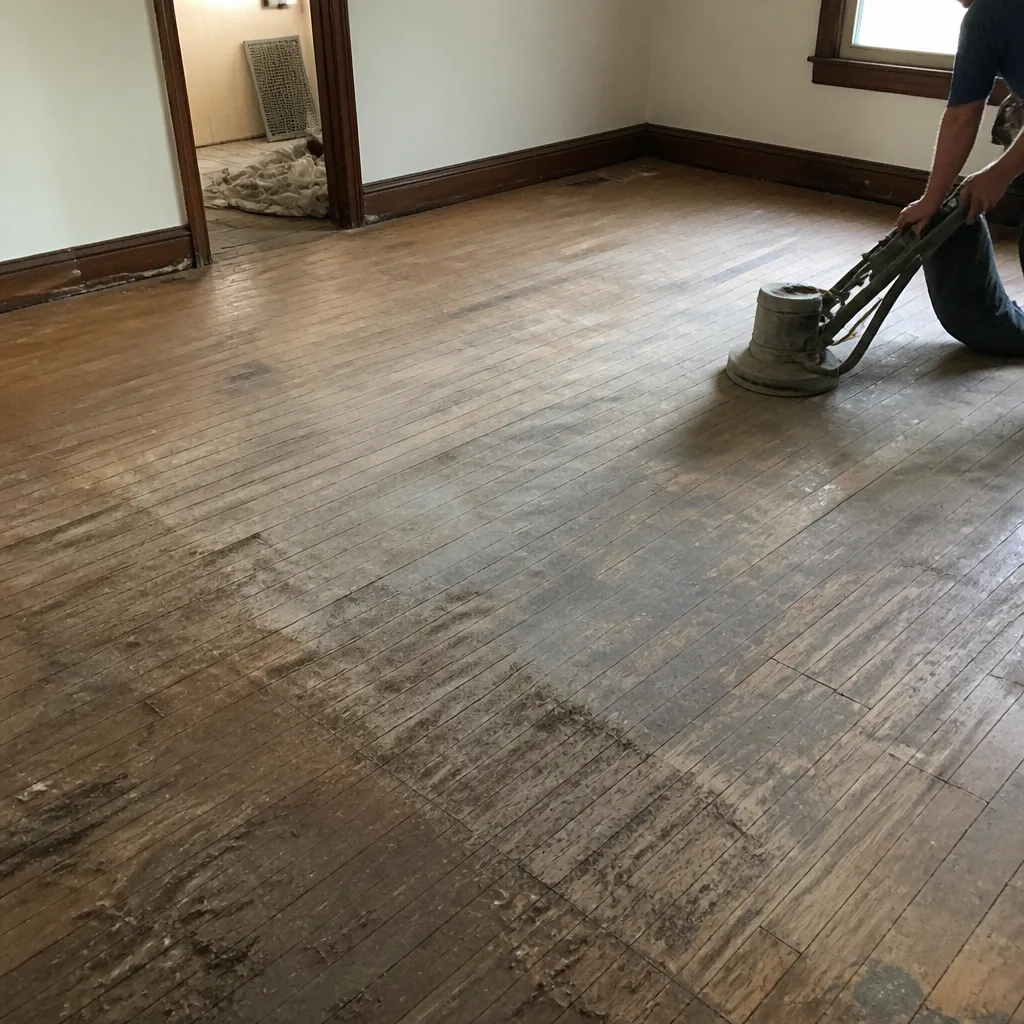 Before
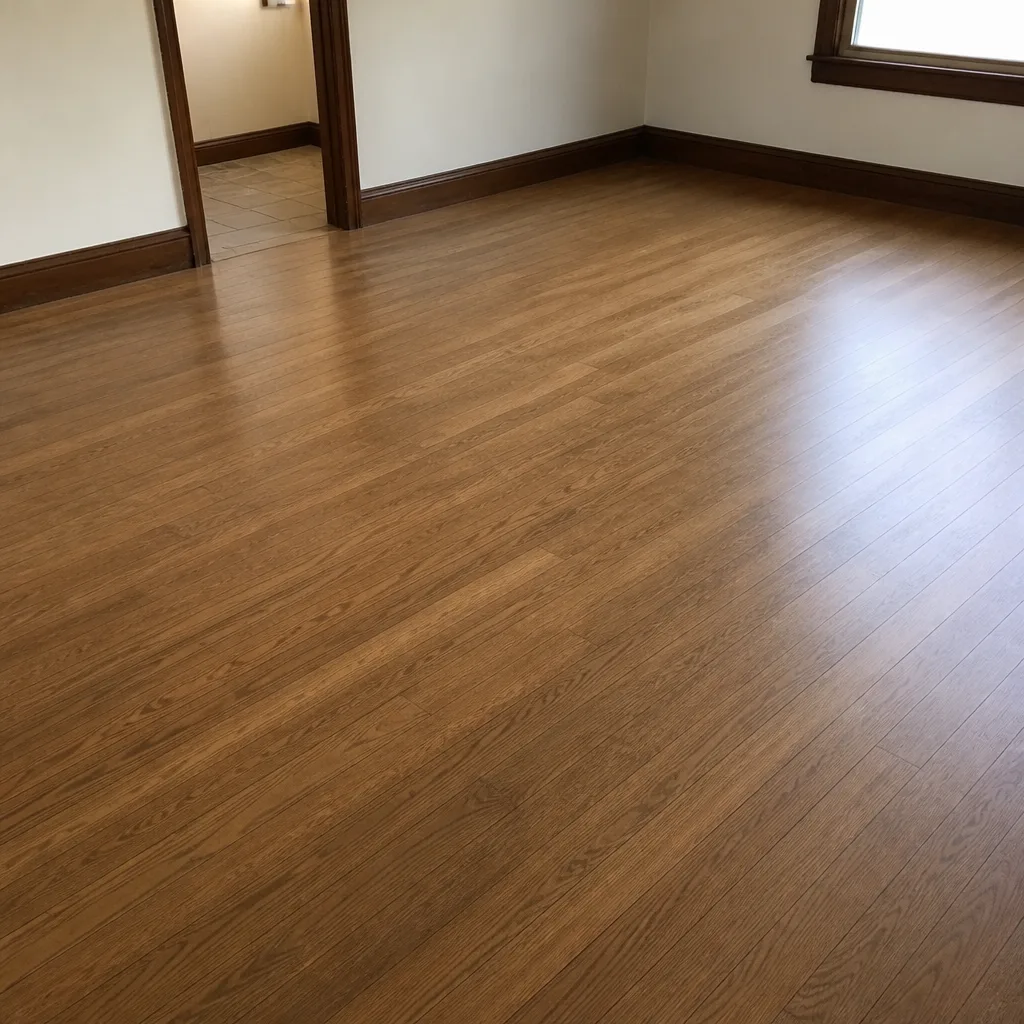 After
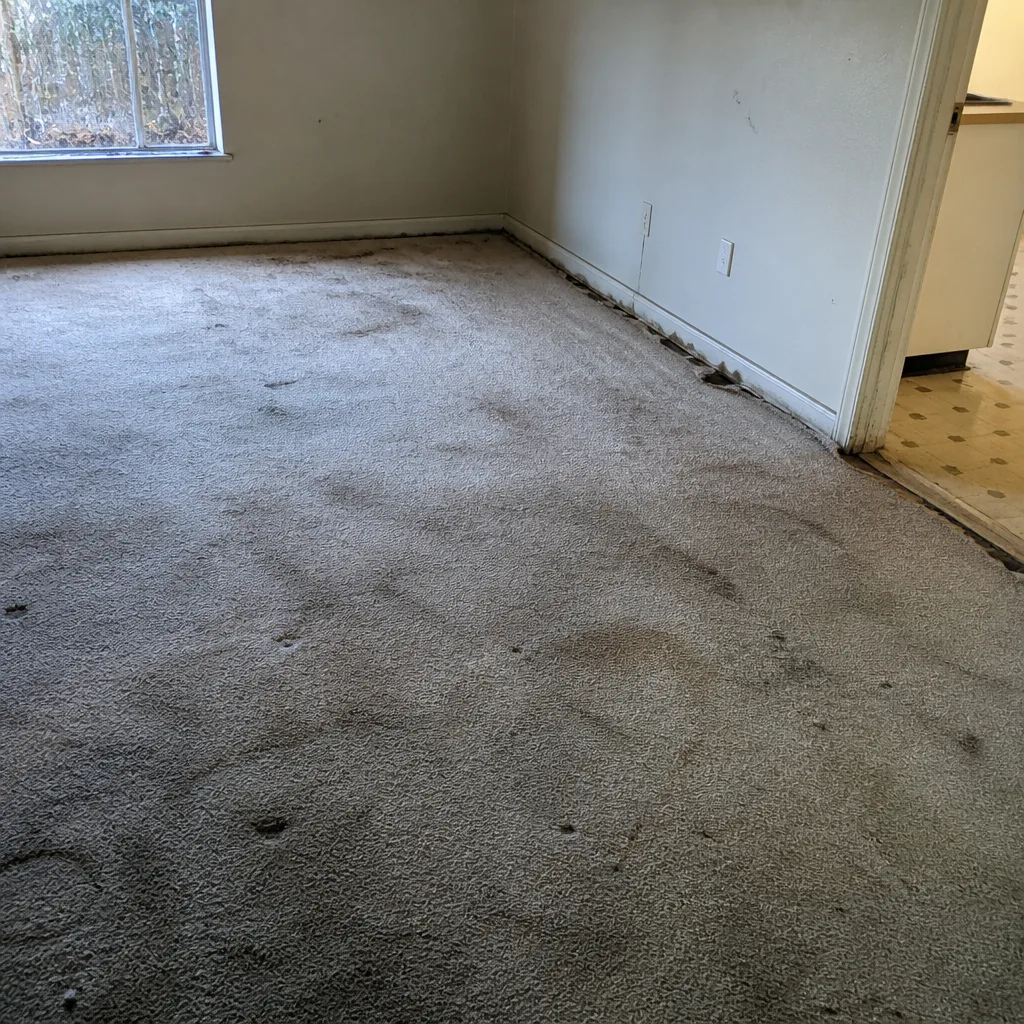 Before
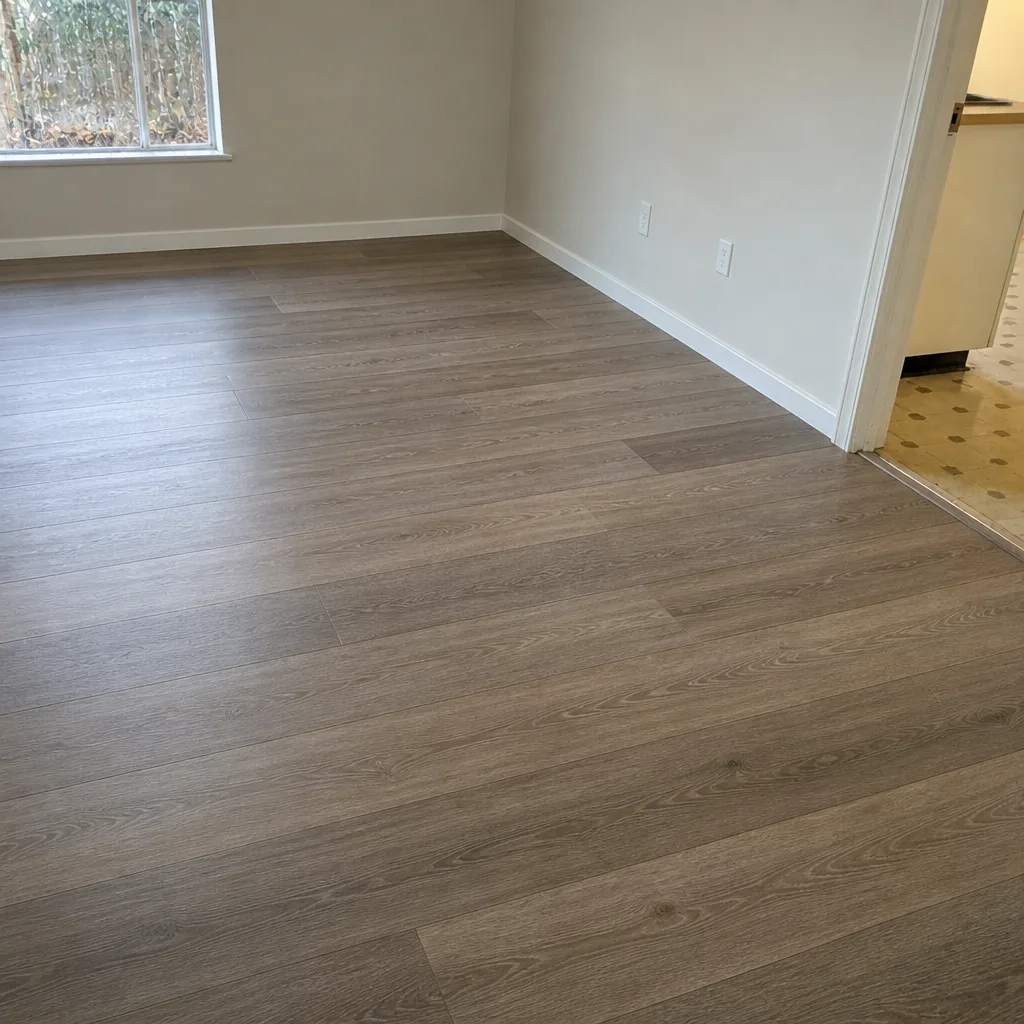 After
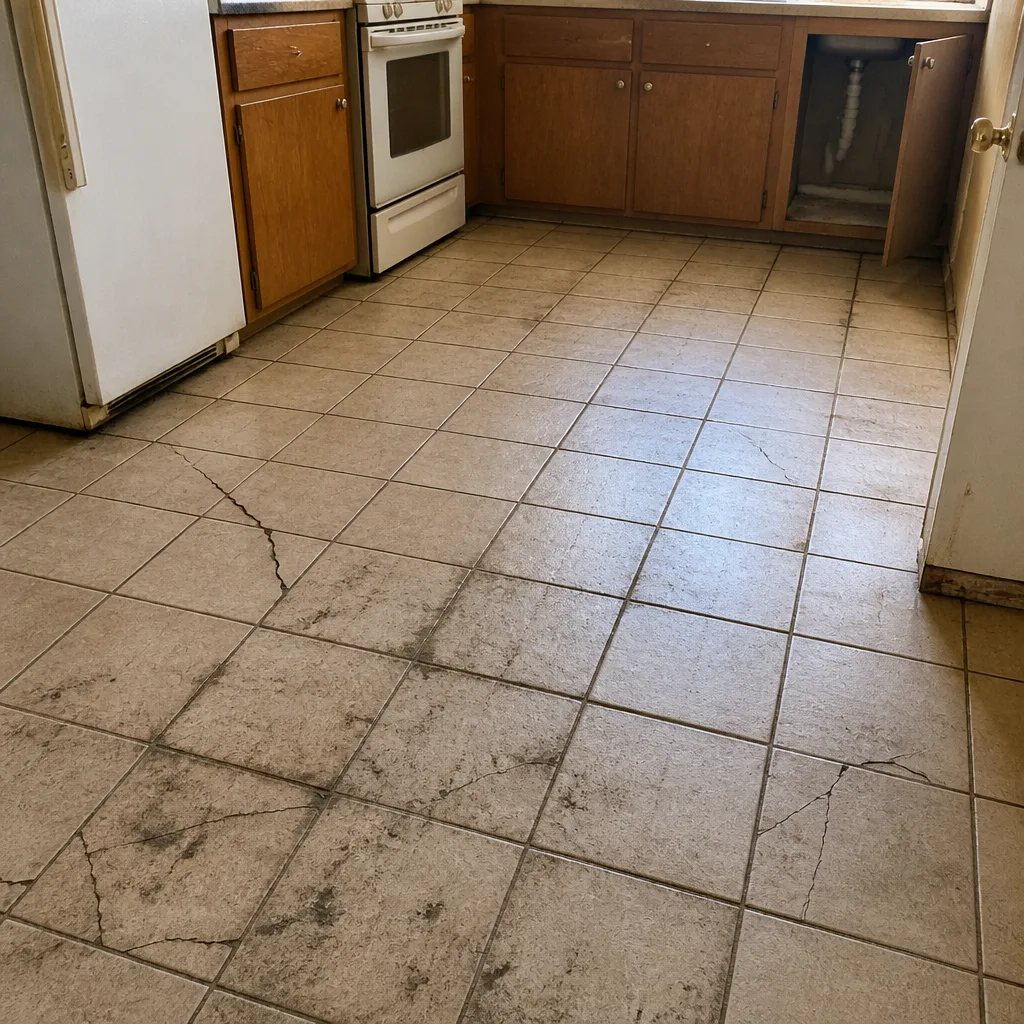 Before
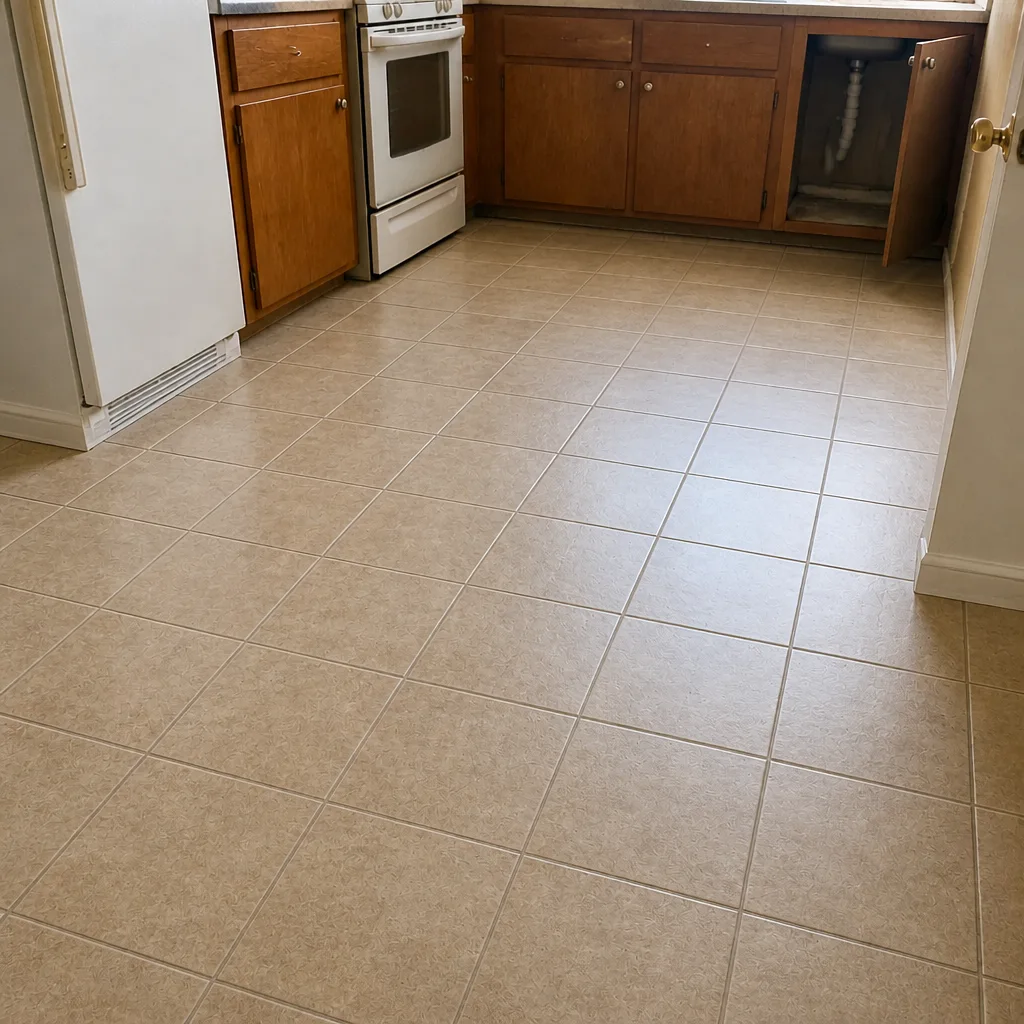 After
When to Call a Professional
Some flooring work is a genuine do-it-yourself project. A small patch in a closet, or a single-room carpet replacement where the subfloor is already sound, can be done by a careful homeowner who reads the instructions. Where it’s worth calling a professional is when the scope grows or the stakes rise.
Call a professional when the floor sits over a slab that hasn’t been checked for moisture, when the job involves tile on a large area, when the home has multiple flooring types that need to transition cleanly, or when the HOA has rules you’re not sure how to meet. Refinishing hardwood is another job where the sanding and finish stages are unforgiving, and a mistake can cost you the floor. Paradise homes also tend to have the kind of sun exposure that makes product selection less forgiving than in milder climates.
Carpet Installation Paradise offers free estimates in Paradise and the surrounding area. Our technicians have up to 12 years of experience across carpet, tile, and hardwood refinishing. Call (844) 797-3061 to schedule your free in-home estimate. We answer 24/7, and fast dispatch runs from 7am to 7pm, Sunday through Friday.
Frequently Asked Questions
Tile and water-resistant luxury vinyl are the most practical all-around choices for a Paradise home, because both handle a concrete slab, extreme summer heat, and everyday spills well. Carpet remains the most comfortable pick for bedrooms. Engineered hardwood is the right route if you want real wood over a slab. The best floor for your specific home depends on the room, the slab condition, and your HOA’s rules, which is what the free estimate sorts out.
Generally no, and it’s the most common material mistake we see in Paradise. Solid hardwood needs a wood subfloor, and most slab homes here aren’t built for it. Engineered hardwood is the realistic hardwood option over concrete, though whether it can be refinished later depends on the thickness of its top layer and its condition. Call (844) 797-3061 for an exact recommendation on your floor – estimates are free.
Possibly, and it’s worth checking before you buy anything. Many Paradise HOAs have rules about noise transmission, which usually means required underlayment for upper floors, and some have approved material lists. Read your CC&Rs and any architectural guidelines, and get approval in writing if your association requires it. The rules vary widely between neighborhoods, so don’t assume a floor that’s fine in one community is fine in another.
There’s no single number, because the cost depends on the product, the square footage, the slab prep, and the installation method. We set the price per job with a written estimate, and the estimate visit is free. That written quote is what sets the final price, so you’re not guessing. Call (844) 797-3061 to schedule your free estimate.
Yes. The in-home estimate is free, and so is the written quote that comes out of it. We measure the rooms, check the slab, talk through product options, and put the price in writing before any work is booked. The written estimate sets the final price. Call (844) 797-3061 to get on the schedule.
The schedule is set at the estimate, once the square footage, product, and method are known. Some rooms move faster than others, and slab prep or pattern work can add time. Rather than promise a number up front that might not hold, we build the timeline into the written estimate. Call (844) 797-3061 for an exact quote – estimates are free.
Neither is universally better. A floating floor rests on an underlayment and expands and contracts as one sheet, so it needs expansion gaps at every wall. A glue-down floor is bonded to the slab and moves less underfoot but needs a dry, prepped concrete surface. In Paradise, the correct method depends on your slab and the product’s instructions. Our technicians have up to 12 years of experience choosing the right method for the room, and we’ll explain the reasoning at the estimate.
The Bottom Line
Flooring a Paradise home is a local decision dressed up as a general one. Slab-on-grade construction rules out solid hardwood and rewards engineered wood, tile, and water-resistant vinyl. Extreme heat cycling makes the floating-versus-glue-down choice a real one, not a detail. HOA density means the approved materials list and underlayment rules come first, before you buy. And the room-by-room map is the plan, whether the house has one flooring type or four.
Nine brands, one installer, and three services under one roof, from carpet to tile to hardwood refinishing, is how we keep a whole-home project from becoming a scheduling puzzle. Our technicians have up to 12 years of experience, and the written estimate sets the final price. If you’re ready to price your project, call (844) 797-3061 for a free estimate. We answer 24/7, and fast dispatch runs from 7am to 7pm, Sunday through Friday.
Written by the team at Carpet Installation Paradise.