
Last updated November 18, 2026
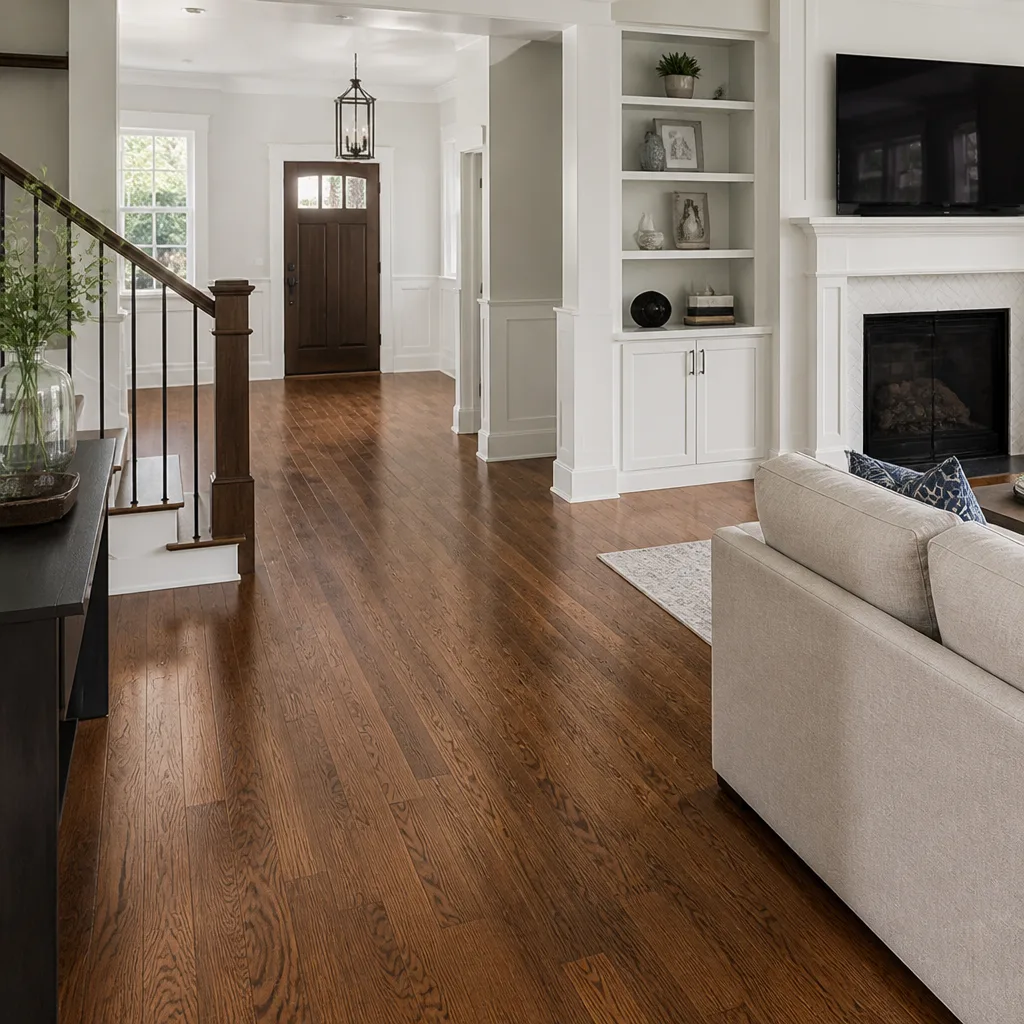 Hardwood
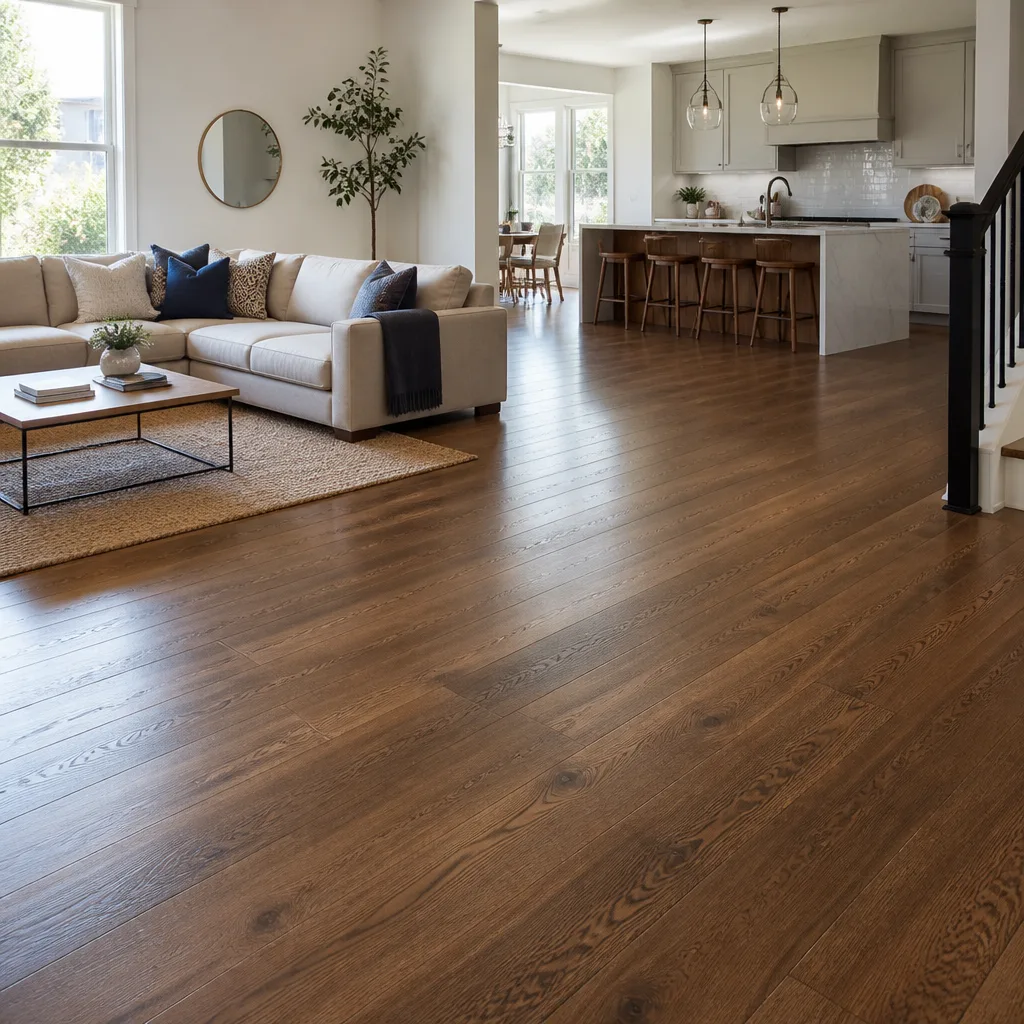 Engineered hardwood
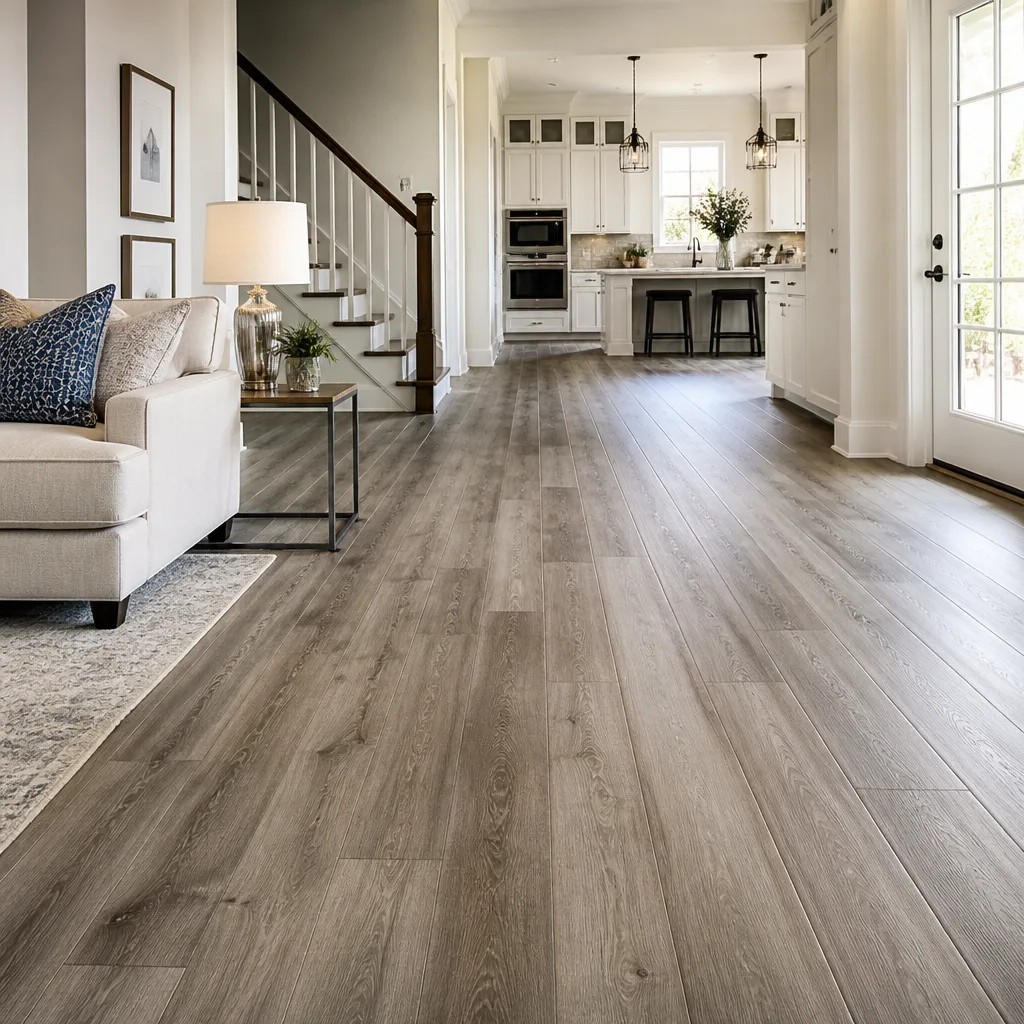 Luxury vinyl plank
 Laminate
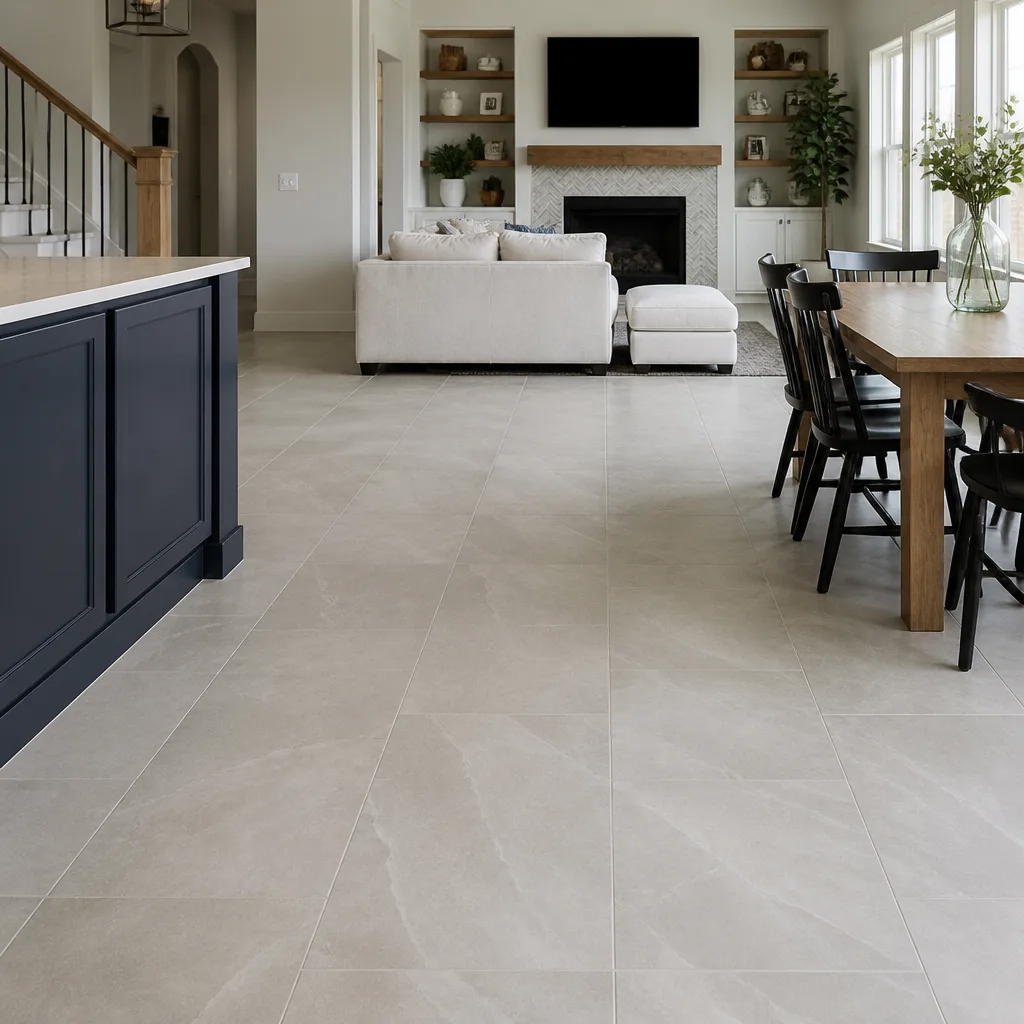 Porcelain tile
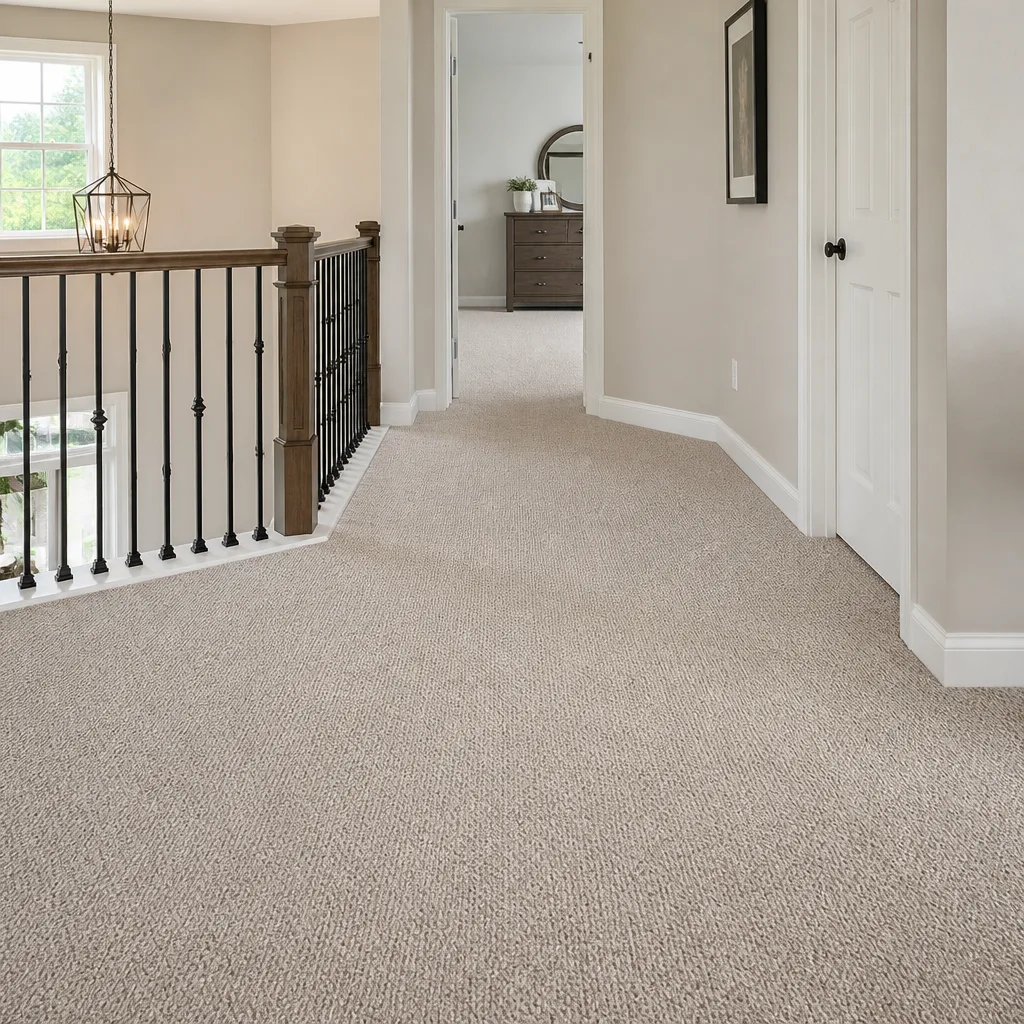 Carpet
 Shaw
 Mohawk
 COREtec
 Pergo
Free in-home measure and written estimate: Shaw, Mohawk, COREtec and Pergo lines compared on your own rooms, with carpet, tile, vinyl plank, laminate and hardwood laid out side by side
Get your free estimateFix It or Start Over: Flooring Repair vs Replacement
A carpet patch over a pet stain can look like a win for a week. Then the smell returns, because the urine soaked through the backing into the pad and the subfloor, and the patch only covered the surface. That’s the trap in the repair-or-replace decision: the visible damage is rarely the whole story. Most homeowners weigh the two options on price alone, and price is the least useful number in the conversation. What actually matters is how many good years the floor has left and whether a repair buys you those years or just delays the inevitable. In this guide we’ll walk you through the decision the way we walk customers through it in Paradise: damage type first, material second, cost-per-remaining-year third, and a clear-eyed look at when replacing one room beats repairing the whole house.
Quick Answer
Repair makes sense when the damage is surface-level, localized, and the flooring still has most of its service life ahead of it. Replace when the damage reaches the subfloor, when the affected area is large or spreading, or when the material is already near the end of its lifespan. The right test isn’t “which costs less today” but “which costs less per year of useful floor you get.” A repair that buys 18 months is expensive even at a low price. A replacement that gives you a fresh decade or more is often the better value even when the sticker number is bigger.
Styles & brands we work with
- Hardwood
- Engineered hardwood
- Luxury vinyl plank
- Laminate
- Porcelain tile
- Carpet
- Shaw
- Mohawk
- COREtec
- Pergo
Table of Contents
- The Subfloor Test: Finding the Real Damage
- Material-Specific Repair Ceilings
- Cost Per Remaining Year: The Number That Actually Decides
- Partial Replacement: When One Room Makes Sense
- The Discontinuation Problem: When Repair Is Impossible
- Hardwood Refinishing: Restore, Don’t Replace
- What Paradise Homes Face That Others Don’t
- A Step-by-Step Decision Framework
The Subfloor Test: Finding the Real Damage
Every repair-or-replace conversation should start under the floor, not on top of it. The subfloor is the structural layer beneath your finished flooring, and if it’s compromised, no amount of surface repair will fix the problem. Water damage, pet accidents, and long-term moisture all travel downward. What you see at the surface is often the last place the damage arrived and the first place it’s noticed.
Here’s how to think through what’s actually happening below:
- Check for softness and give. Walk the affected area slowly. A floor that flexes or feels spongy underfoot is signaling subfloor trouble. Surface repair won’t fix a soft floor.
- Look for staining at seams and edges. Lift a transition strip or pull back carpet at the edge of the room. Dark staining or swelling at the subfloor seams tells you moisture has traveled.
- Smell test the pad and backing. Odors that return after a surface clean usually mean the source is in the pad or subfloor, not the carpet fibers.
- Check for cupping or crowning in hardwood. Edges that curl up (cupping) or centers that bulge (crowning) indicate moisture imbalance from below, not just surface wear.
- Probe grout lines and tile edges. Loose or cracked tile with movement underneath points to a substrate problem that regrouting or replacing one tile won’t solve.
If any of these checks turn up a problem, the math changes completely. Replacing the surface over a damaged subfloor is money poured into a hole. The subfloor has to be addressed first, and once you’re paying for subfloor work, replacement of the finished floor usually becomes the more sensible path.
Material-Specific Repair Ceilings
Every material has a point past which repair stops making sense. We’ve seen homeowners spend real money extending the life of a floor that was already living on borrowed time. Here’s the honest ceiling for each category we work with.
Carpet
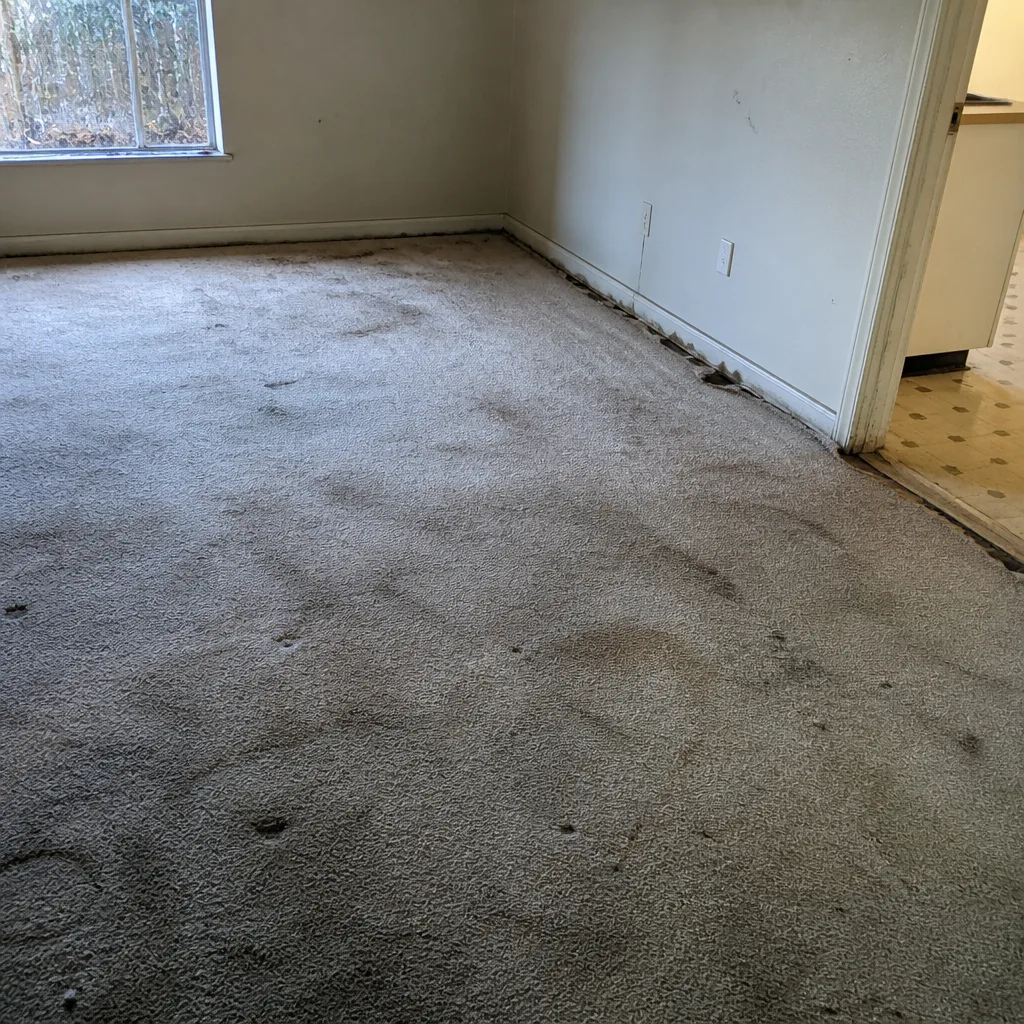
Carpet is the most repairable surface when the damage is contained. A patched section, a stretched area, a restretched room after furniture moves: these are reasonable repairs. The repair ceiling arrives when the damage is widespread, when pet contamination has reached the pad, or when the carpet is already worn thin in traffic lanes. Carpet that’s matted and worn across the whole room won’t look right with a fresh patch in the middle, and the new section will outlast the old by years you can see.
Tile
Individual tile replacement is straightforward when you have matching tile on hand and the substrate beneath is sound. Cracked tile from impact is a good candidate. Loose tile from a failing substrate is not, since replacing it just repeats the failure. The ceiling for tile repair is reached when the crack pattern is widespread, when grout is failing across the whole floor, or when you can’t match the tile. Daltile makes a broad range of tile, but discontinued patterns stay discontinued no matter who makes them.
Luxury Vinyl Plank and Tile
LVP and LVT are repairable in sections when the product is still available and the locking system allows individual plank removal. LifeProof and similar floating installations can sometimes have a damaged plank swapped without tearing out the whole floor. The catch: replacement planks have to match the run you already have. If the product has been discontinued or the dye lot has shifted, that repair becomes much harder than it looks.
Hardwood
Hardwood is where repair ceilings get interesting, because refinishing resets the surface without replacing the boards. Refinishing is a genuine repair, not a patch, and it restores the whole floor at once. The ceiling is set by how much wear layer the boards have left and their overall condition. A floor that’s been sanded to its limits can’t be sanded again. We check this at the estimate, since it determines whether refinishing is a real option or a costly dead end.
Cost Per Remaining Year: The Number That Actually Decides
Upfront price comparison is the wrong tool. A repair quoted at a modest number and a replacement quoted much higher can flip entirely once you divide by the useful years each one delivers. That’s cost per remaining year, and it’s the number that should drive the decision.
Here’s the calculation:
- Estimate the remaining service life of the repair. If a carpet patch covers 20% of a carpet that has 5 good years left, the patch is really buying you those same 5 years, not 5 new ones.
- Estimate the remaining service life of a replacement. A new floor starts its own life cycle from the install date.
- Repeat with the actual estimates. Once you have both written numbers in front of you from a free estimate, run the math: repair cost divided by years gained, versus replacement cost divided by years gained.
- Compare the two figures, not the two totals. Whichever number is lower per year is the better investment, even if the bigger sticker price sits on the other side.
What this exposes is the delay trap. A repair that extends a floor 18 to 24 months looks cheap against replacement until you realize you’ll be making the replacement decision again soon, and paying the same or more by then. Two repairs stacked on top of each other often cost more than one replacement that would have covered the same stretch of time and given you a fresh floor in the middle of it.
The flip side matters too. A repair on a floor that has 60% or 70% of its life left is genuinely smart money. You keep the floor you’ve been happy with, you avoid the disruption of a full tear-out, and you spend far less than the replacement would cost. The key is being honest about which side of that line you’re on.
If you want a second opinion on that calculation, the team at Carpet Installation Paradise runs through it with you at the free estimate. You’ll have written numbers for both paths before you decide.
Partial Replacement: When One Room Makes Sense
Partial replacement is the middle path: replace one room or one section rather than the whole house. Sometimes it’s the obvious choice. Sometimes it creates problems that cost more long-term than a full replacement would have. The difference is matching and transitions.
Partial replacement works well when:
- The damaged room is self-contained with a clear transition to adjoining space, like a single bedroom or a finished basement.
- The adjoining flooring is either new enough to match or different enough that a deliberate transition looks intentional.
- You’re changing the material for that room anyway, like swapping carpet for tile in a bathroom or laundry area.
Partial replacement gets complicated when:
- The adjoining flooring is the same material and needs to match. A fresh carpet section next to older carpet is visibly different, even if you use the same color name.
- The transition has to be seamless across a doorway or an open-plan boundary. Getting that right often costs more in labor and trim than replacing the whole connected area.
- You’re hoping to replace later and need the floor to “look fine” for a few more years. Mismatched sections tend to look mismatched from day one.
In our experience, partial replacement works best when the new section is deliberately different. That’s where tile flooring installation in a bathroom or entryway shines as a partial replacement: you’re not trying to match an existing material, you’re establishing a new one with a clean transition of its own. That kind of partial replacement is a decision you can feel good about for years, because it doesn’t depend on matching a floor that won’t ever match perfectly.
A home with multiple flooring types is common in Paradise, and it’s a good reason to work with a single-source specialist. We install and refinish carpet, tile, and hardwood, so you don’t need to coordinate separate trades for a mixed-floor home. One visit, one written estimate, one installer for the whole job.
The Discontinuation Problem: When Repair Is Impossible
Sometimes repair isn’t expensive. It’s impossible. Carpet, tile, and luxury vinyl are made in production runs, and when a run ends it doesn’t come back. A discontinued carpet color, a discontinued tile pattern, a plank profile that’s been retired from a brand’s lineup: those products won’t be available at any price. That makes “repair” an aesthetic dead end, regardless of how reasonable the labor cost might be.
Here’s how to check before you commit to repair:
- Find the original product information. Check for a manufacturer tag under the carpet, a leftover box in the garage or attic, or paperwork from a previous install.
- Contact the manufacturer directly. Even brands like Armstrong and Mannington retire products; the maker can tell you if the exact product is still in production.
- Ask for a dye-lot match. Even when the product line continues, a new production run may not match your original dye lot or color batch.
- Compare a sample under your actual lighting. Colors that look identical on a manufacturer’s swatch can look obviously different in your room.
- Have a plan B. If matching isn’t possible, the realistic options are replacing the whole affected area or choosing a deliberately contrasting material for the repair section.
This is why we push the discontinuation check early. The worst outcome is deciding to repair, paying for labor, and only then discovering that nobody can match the material. A short conversation at the estimate saves that entire problem. You’ll know before any work starts whether a match is genuinely available or whether you’re choosing between a full replacement and a deliberate design change.
Hardwood Refinishing: Restore, Don’t Replace
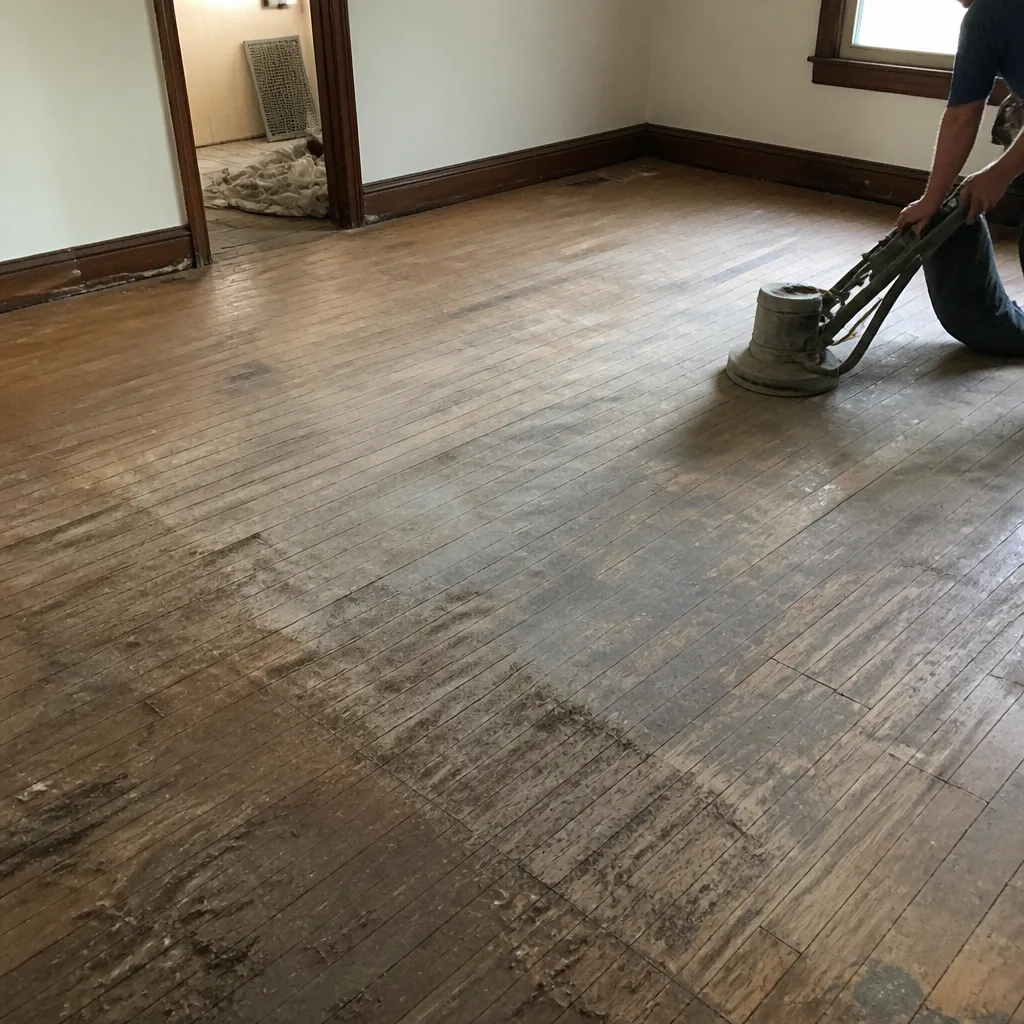
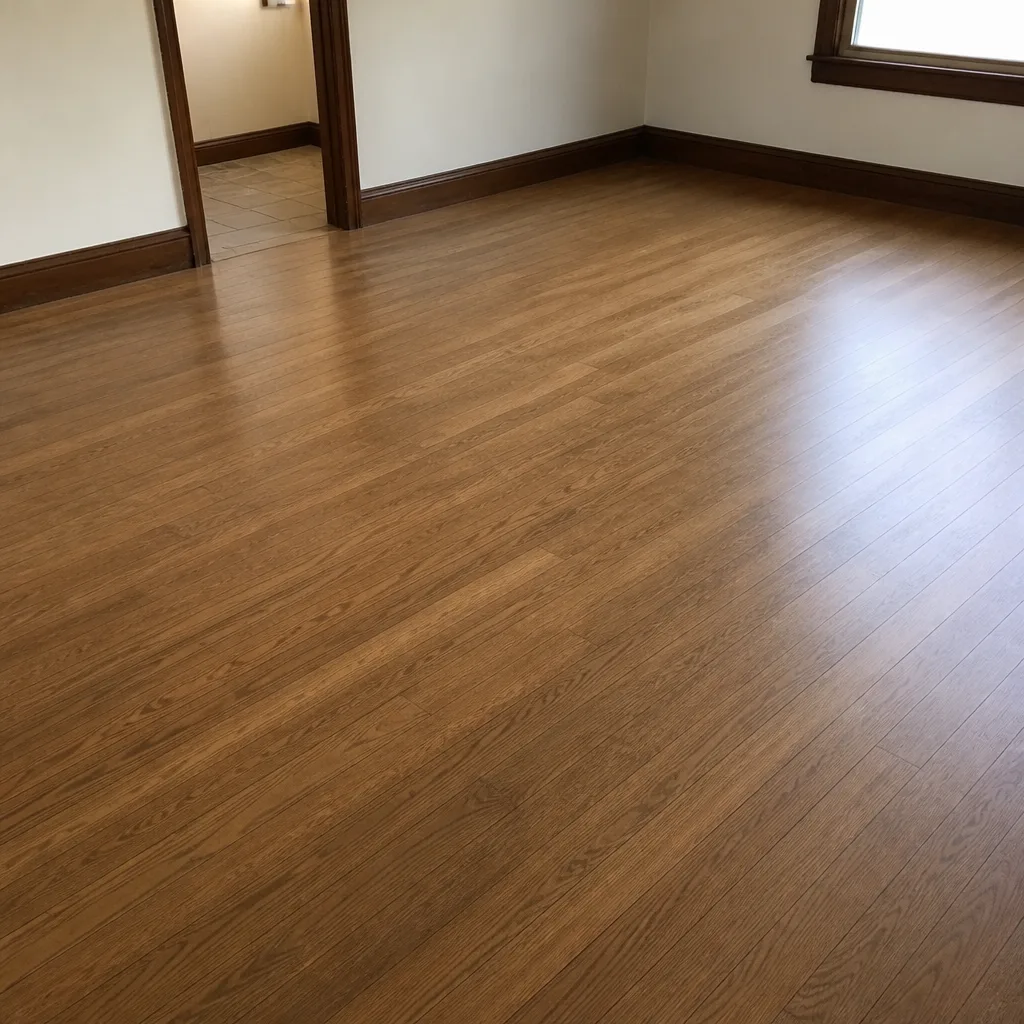
Hardwood is the one category where repair can genuinely reset a floor’s clock. Refinishing sands the surface down to fresh wood and applies a new finish, and the result should look and behave like a new floor for years to come. That’s not a patch; it’s a full restoration of the surface your feet touch.
It’s also where the “is repair worth it” question has a real answer that surprises people. Refinishing typically costs a fraction of a full hardwood replacement and keeps the original boards in place. The boards might be fifty years old, but that’s fine, because hardwood is meant to be maintained this way. You’re not covering damage; you’re removing it.
What makes refinishing viable is simple: enough thickness in the wear layer for the sanding to remove the worn surface without hitting the tongue. This is checked at the estimate by inspecting the boards, their thickness, and their condition. If the floor has already been sanded too many times, refinishing can’t be repeated and replacement may be the only path. Refinishing is a service we run as a core part of the business alongside carpet and tile, because restoring a floor instead of ripping it out is often the smartest decision available. It also avoids the disposal and landfill burden of a full tear-out. If you’re wondering whether your hardwood can be brought back rather than torn out, find our Paradise team and have them look at the boards before you make the call.
What Paradise Homes Face That Others Don’t
Flooring decisions in Paradise carry some local quirks that change how repair and replacement play out. The desert climate is the big one. Air this dry pulls moisture out of wood, and hardwood that hasn’t been acclimated to the home’s conditions can shrink, gap, or cup after installation. The same dry air can also affect how adhesives and finishes cure. This isn’t a reason to avoid any particular material; it’s a reason to make sure whoever installs your floor understands how to handle the local conditions.
Indoor humidity swings are the other factor. Homes in Paradise often run the air conditioner constantly, and the humidity indoors can be notably different from what the weather app reports outside. Flooring that’s installed without accounting for indoor conditions can develop movement, noise, or seam problems over time, and repairs on those floors tend to fail the same way the original install did. If your existing floor has gapping or cupping that you’re trying to “fix,” it’s worth knowing whether those problems are caused by material failure or by the environment around the material.
Home turnover is another local factor. Paradise has a lot of homes that change hands, and new homeowners often inherit floors that were installed by the previous owner with unknown materials and unknown workmanship. That’s where the discontinuation check really matters: you may not have any record of what’s under your feet. A professional inspection can usually identify the material and give you a realistic read on repair or replacement.
We work across residential flooring in Paradise as a flooring specialist, not a general contractor. That focus matters when a repair decision depends on understanding how the material and the local environment interact. Nine brands, one installer, and the same conversation about repair versus replacement whether you’re working with an older home or a recent renovation. For the carpet side of the same conversation, our carpet installation team can walk through repair versus replacement options for bedrooms, stairs, and living areas without you needing to call anyone else.
A Step-by-Step Decision Framework
Here’s the framework we walk through with every homeowner considering repair versus replacement. Work through it in order and the right answer usually becomes obvious.
- Identify the damage. Surface-only, or does it reach the pad, the adhesive, or the subfloor? If it reaches the subfloor, default to replacement and treat the repair math as secondary.
- Identify the material. Carpet, tile, LVP, or hardwood. Each has a different repair ceiling and a different set of realistic repair options.
- Check whether the material can be matched. If it’s discontinued, partial replacement and repair are off the table unless you’re willing to embrace a deliberately different material.
- Estimate remaining service life honestly. How many good years does the current floor have if you left it alone? How many would a repair extend that by? How many would a replacement give you?
- Run the cost-per-remaining-year math with written estimates. Divide each option’s cost by the years of useful floor it delivers and compare the two figures.
- Check the transitions. If a partial replacement has to match an adjoining floor, factor in the risk and labor of a perfect match. Often the simpler choice is a full-room or full-area replacement.
- Get a free in-home measure and estimate. None of this math is reliable without real numbers, and the inspection is the only way to know what’s under the surface.
- Book the install once the decision is made. A flooring install is scheduled work, not a walk-in service. Once you have the numbers and the material on hand, the install day is set.
That last step is where a lot of homeowners lose track of the schedule. The estimate visit is where you get the written price, the material decision, and the install day. Nothing happens until you know the numbers, so calling early is always the better move. Call (844) 797-3061. We answer 24/7. Fast dispatch from 7am to 7pm, Sunday through Friday.
Common Mistakes to Avoid
- Repairing over subfloor damage. If the subfloor is soft, stained, or moving, surface repair won’t last. The new material will fail, and you’ll be paying for the same repair again. Get the subfloor inspected before you commit to any surface fix.
- Comparing sticker prices instead of cost-per-year. A cheap repair on a floor near the end of its life can cost more over the next 24 months than a replacement that would have given you a decade of new floor. Do the division, not the subtraction.
- Skipping the discontinuation check. Assuming a carpet, tile, or LVP product is still available is the fastest way to waste money. Manufacturers retire products, and there’s no substitute for calling them directly.
- Refinishing a hardwood floor that’s been sanded too many times. Every refinish removes thickness. A floor that’s already at its minimum can’t be sanded again, and trying will damage it permanently. Have the boards checked at the estimate before assuming refinishing is viable.
- Patch-matching carpet or tile without test-sampling under the room’s lighting. A sample that looks right in the store can look obviously different in your home, especially in the bright desert light common in Paradise. See the sample next to the existing floor before you approve it.
- Repairing one labeled “waterproof” vinyl section next to a moisture source. Waterproof refers to the plank’s core, not the room. If the source is under the floor, a repair covers the symptom and lets the underlying problem continue to damage the subfloor.
- Forgetting the transition trim in the repair plan. A repair at a doorway or a room boundary almost always needs transition work, and that labor can eat into the savings you were counting on.
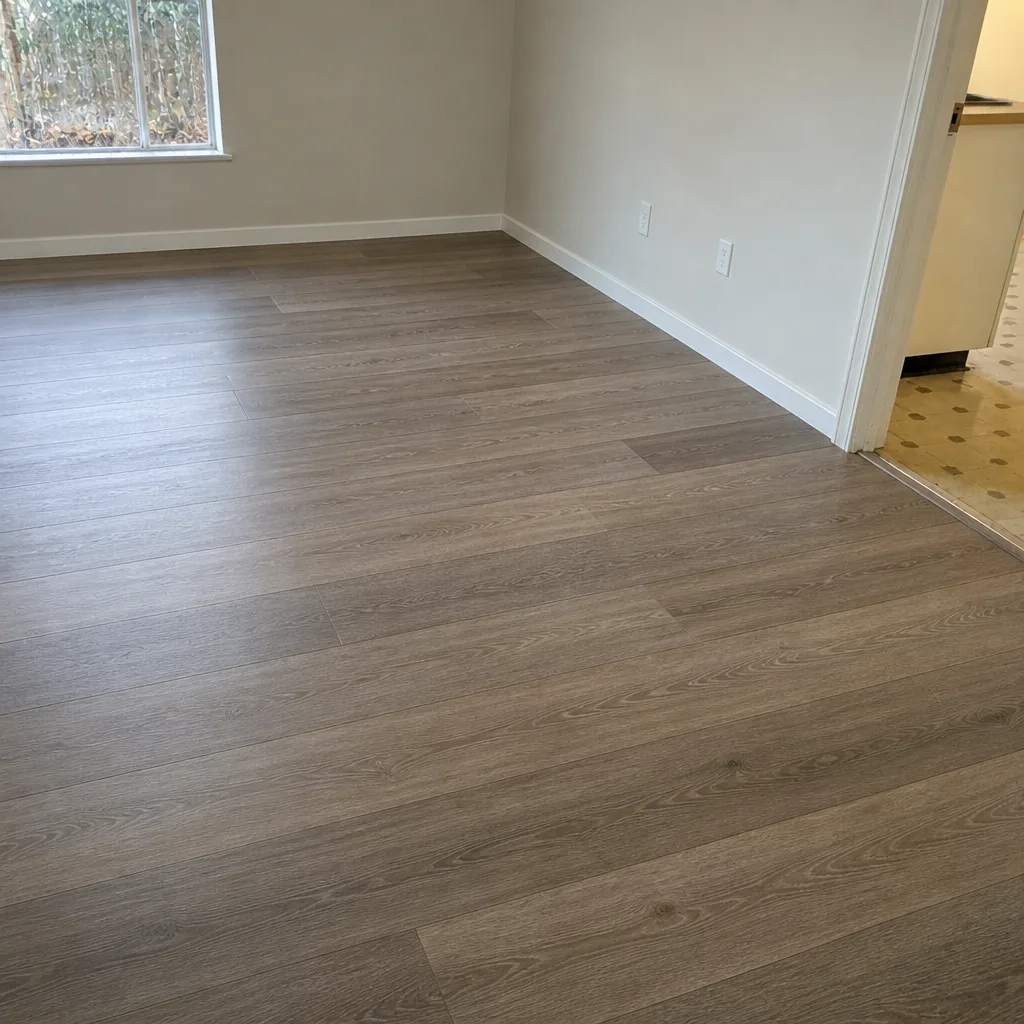
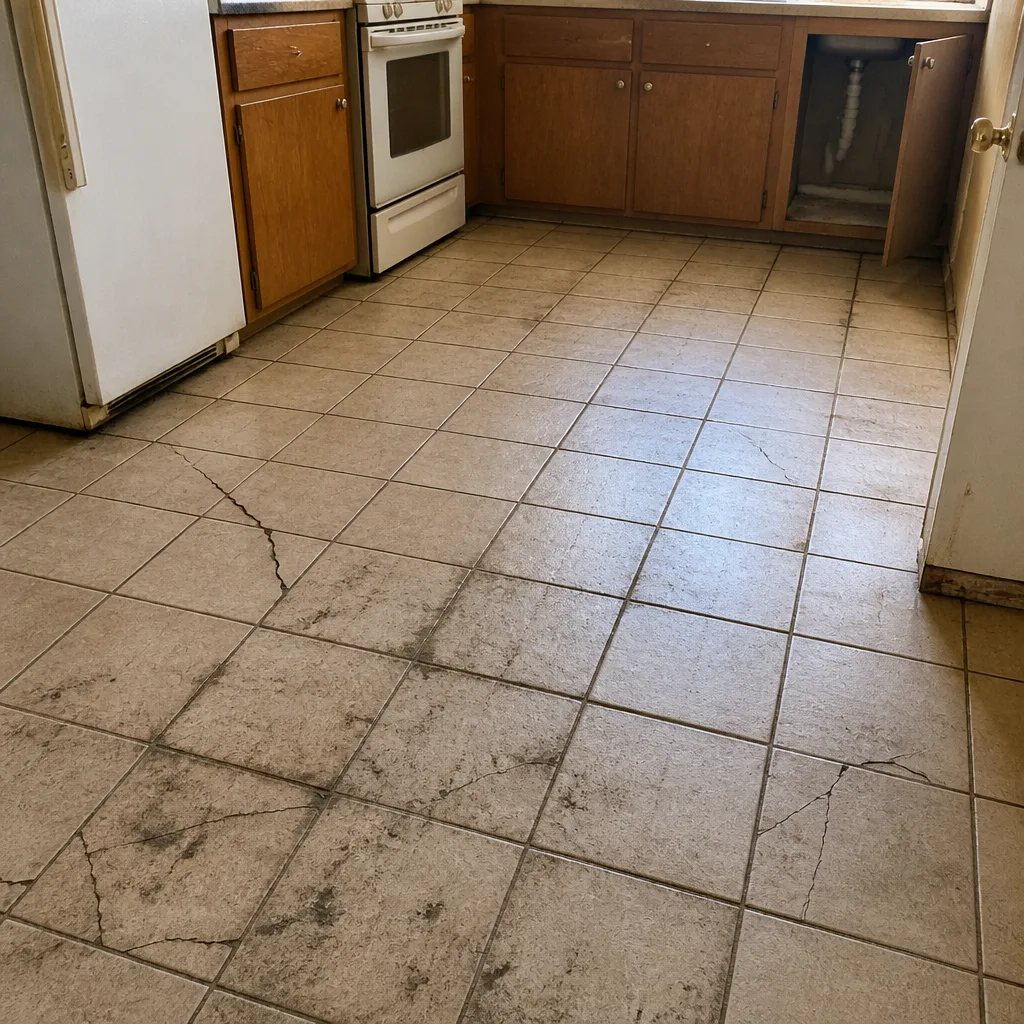
See the difference
 Before
 After
 Before
 After
 Before
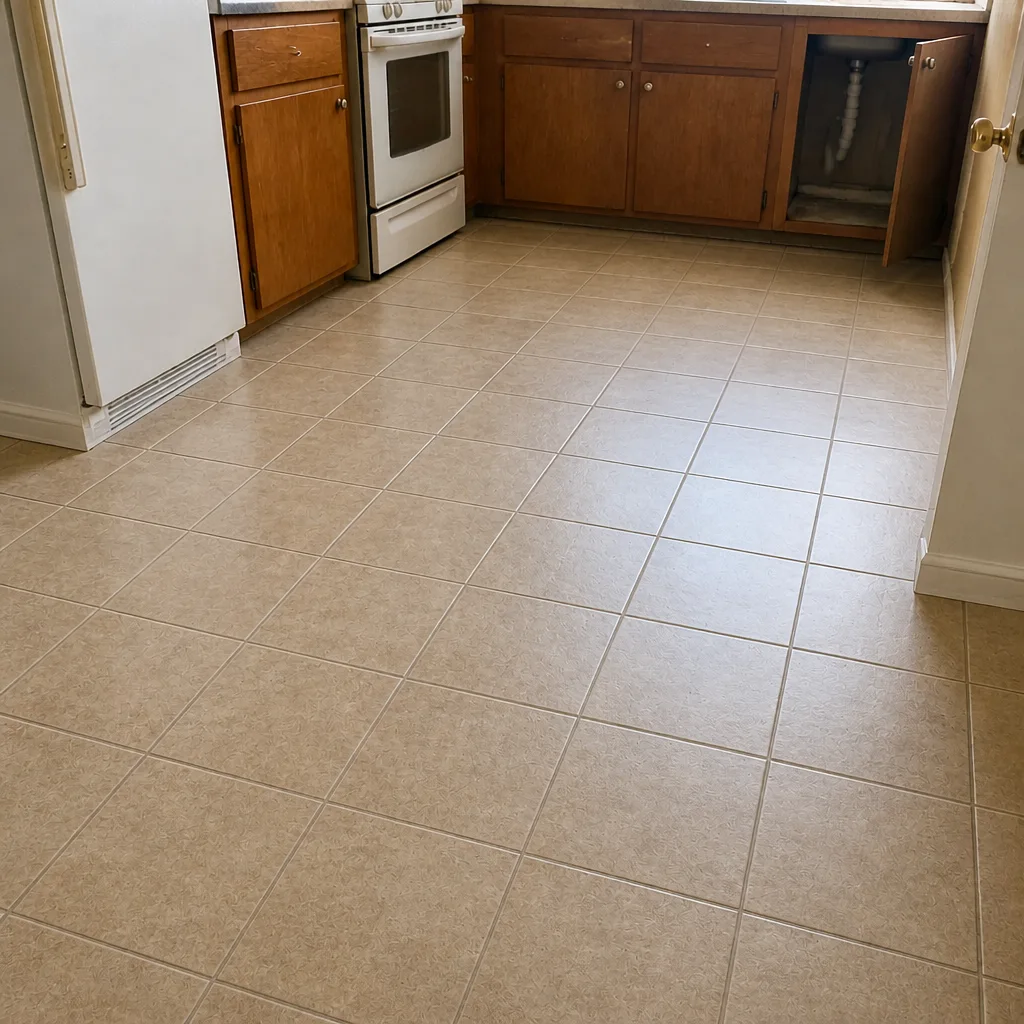 After
When to Call a Professional
Call a flooring specialist when the answer to the repair-or-replace question isn’t obvious from the surface, or when you’ve had a repair fail and you’re not sure why. If a floor is cupping, gapping, soft underfoot, or repeatedly staining through, those are signs the subfloor or the environment needs a look before any new material goes down. If you have hardwood that may be refinishable, that assessment needs a trained eye, since sanding a floor that’s already too thin will damage it. If you’re dealing with a discontinued product, a partial replacement that has to match an adjoining floor, or a mixed-material home that needs a coordinated plan, a single-source specialist will save you from calling three trades. Carpet Installation Paradise offers free estimates in Paradise – call (844) 797-3061. We answer 24/7. Fast dispatch from 7am to 7pm, Sunday through Friday.
Frequently Asked Questions
Flooring repair is worth it in Paradise when the damage is surface-level, the material can still be matched, and the floor has most of its service life left. A patch or repair on a floor with years ahead of it usually costs far less than replacement and keeps a floor you already know. If the subfloor is compromised or the material is discontinued, repair isn’t worth it regardless of price. Call (844) 797-3061 for a free estimate so you can compare both paths with real numbers rather than guesses.
Signs of subfloor damage include soft or spongy spots underfoot, dark staining at seams and edges, lingering odors that return after cleaning, and hardwood cupping or crowning. Water and pet accidents often reach the subfloor before the surface shows real damage. If you notice any of those signs, have the floor inspected before deciding between repair and replacement, because surface repair over a damaged subfloor won’t hold. Call (844) 797-3061 to schedule the free estimate.
No, hardwood can’t always be refinished. The floor needs enough thickness left for the sanding to remove the worn surface without hitting the tongue. If a floor has already been sanded down too many times, refinishing will damage it. Whether your boards have enough material left is checked at the estimate. If they do, refinishing often avoids the cost and disruption of a full replacement. Call (844) 797-3061 to get that check done before you decide.
If your carpet or tile has been discontinued, a true matching repair isn’t possible. You can sometimes source remaining stock from a retailer or installer, but if it’s gone, it’s gone, and no amount of labor will make an unmatched patch look right. The realistic options are replacing the whole affected area or choosing a deliberately different material. Ask about matching before you commit to any repair. Call (844) 797-3061 for a free estimate and we’ll help you check.
Repairing one room makes sense when the room has its own clear transition and the adjoining flooring either matches or is deliberately different. It stops making sense when the patch has to blend seamlessly across a doorway or an open-plan boundary, since matching labor often costs more than the original savings. In those cases, full-area replacement is usually the better long-term call. Call (844) 797-3061 to talk through which option fits your floor plan.
The estimate is free, and it’s the step where you get a written price, a material recommendation, and a realistic schedule for the install. The install itself is a booked job rather than a walk-in service, and the exact timing depends on the material, the room, and the prep work required; the schedule is set at the estimate. You’ll know what to expect before you commit. Call (844) 797-3061 to schedule your free estimate.
The Bottom Line
The repair-versus-replacement decision isn’t really about price. It’s about how many good years each option buys you. Surface damage on a young floor with a matchable material is a repair, and a smart one. Damage that reaches the subfloor, a floor past its service life, or a material nobody can match points toward replacement. Run the cost-per-remaining-year math with real written numbers, check what’s under the surface before you commit, and let the answer follow the facts. Nine brands, one installer, and a free estimate that gives you the numbers you need to decide.
Written by the team at Carpet Installation Paradise.